Dumpster Rental in Lascassas, TN: Local Delivery Guide
Plan a dumpster rental in Lascassas, TN with driveway, truck-access, project-timing, and loading steps to review before requesting a 15-yard container.

A dumpster rental lascassas tn residents arrange for a renovation, cleanout, or landscaping project works best when the placement spot and truck route are planned before delivery. Start by checking the driveway, identifying access limits, and estimating how long loading will take. These steps help you make a clear request and prepare the property without assuming that every address or date is available.
What should Lascassas residents confirm before requesting delivery?
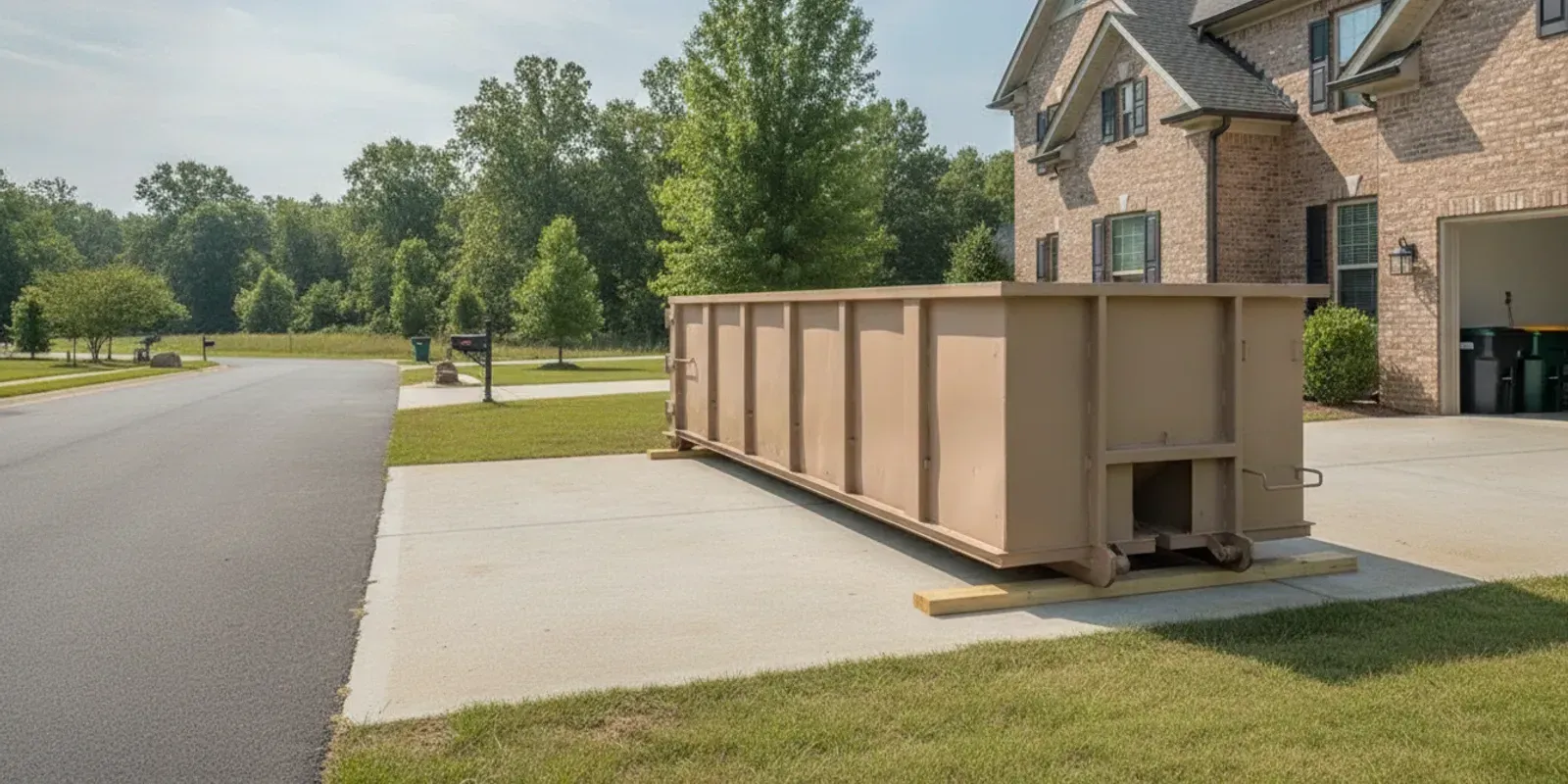
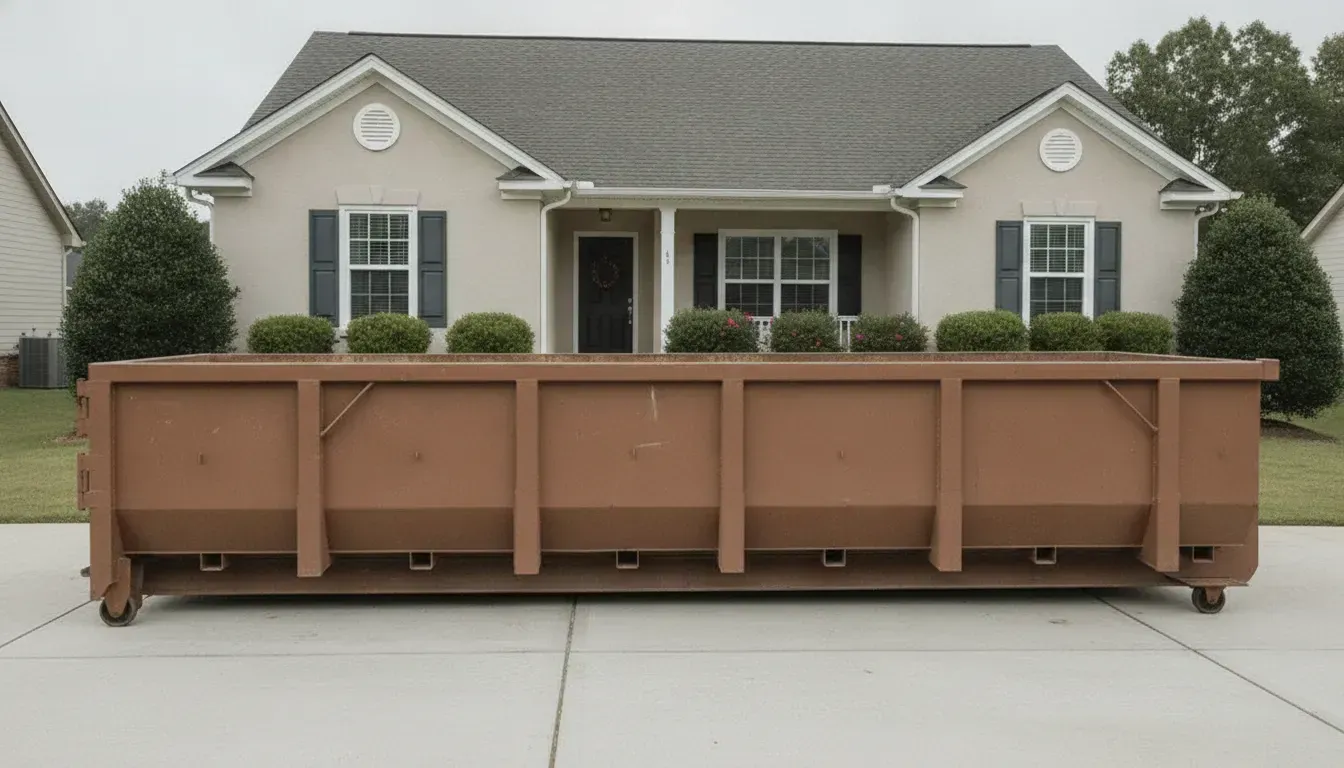
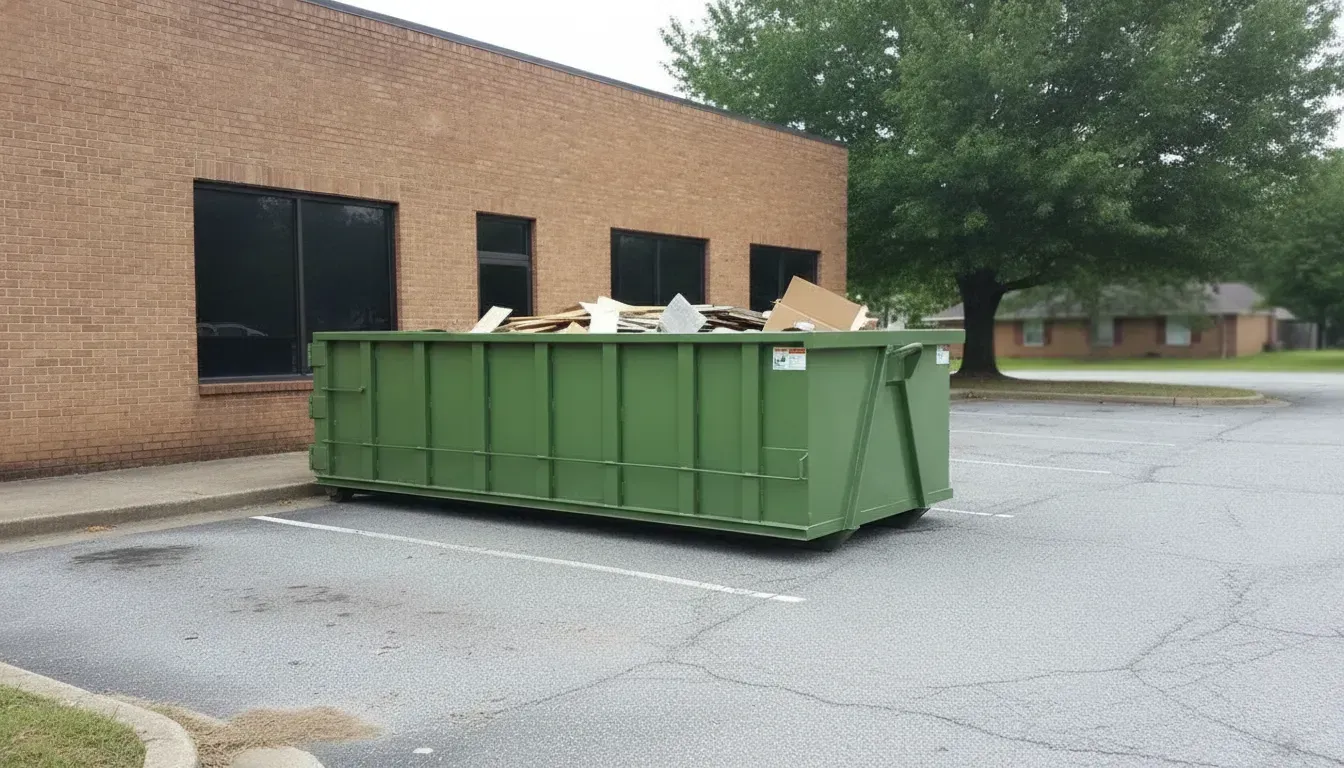
Begin with the project, not just the container. Write down what you plan to remove, where it is located, and when it will be ready to load. A 15-yard roll-off is the documented rental option. It is used for many renovation, moving, landscaping, and smaller construction projects. The container measures about 5 feet high by 14 feet long by 7.5 feet wide. Its footprint matters, but the truck also needs an open route and room to position it.
Rapid Removal Dumpster serves Rutherford County and surrounding areas. Lascassas is a target service area, but the address, date, and delivery details should be confirmed with the company. When you request service, provide the complete delivery address, project type, preferred date, and likely rental period. A submitted request is not instant online booking. Wait for a representative to confirm the details before scheduling contractors or relying on a delivery date.
It helps to make a short note about the property before contacting the provider. Is the driveway narrow, steep, shared, or partly blocked? Are there gates, low branches, overhead lines, parked cars, or a tight turn from the road? Mention these conditions early. If a driver cannot safely reach the planned spot, a second location may be needed. Discuss alternatives before delivery day instead of making a last-minute decision.
How do you measure the driveway and placement spot?
Measure the proposed area and inspect it from more than one direction. The container is approximately 14 feet long and 7.5 feet wide, but do not treat those dimensions as the only space needed. A delivery vehicle needs room to approach and position the roll-off. You also need a practical path for carrying debris to the opening. Ask the provider what clearance is needed for your driveway and delivery approach rather than guessing at the truck's turning or operating space.
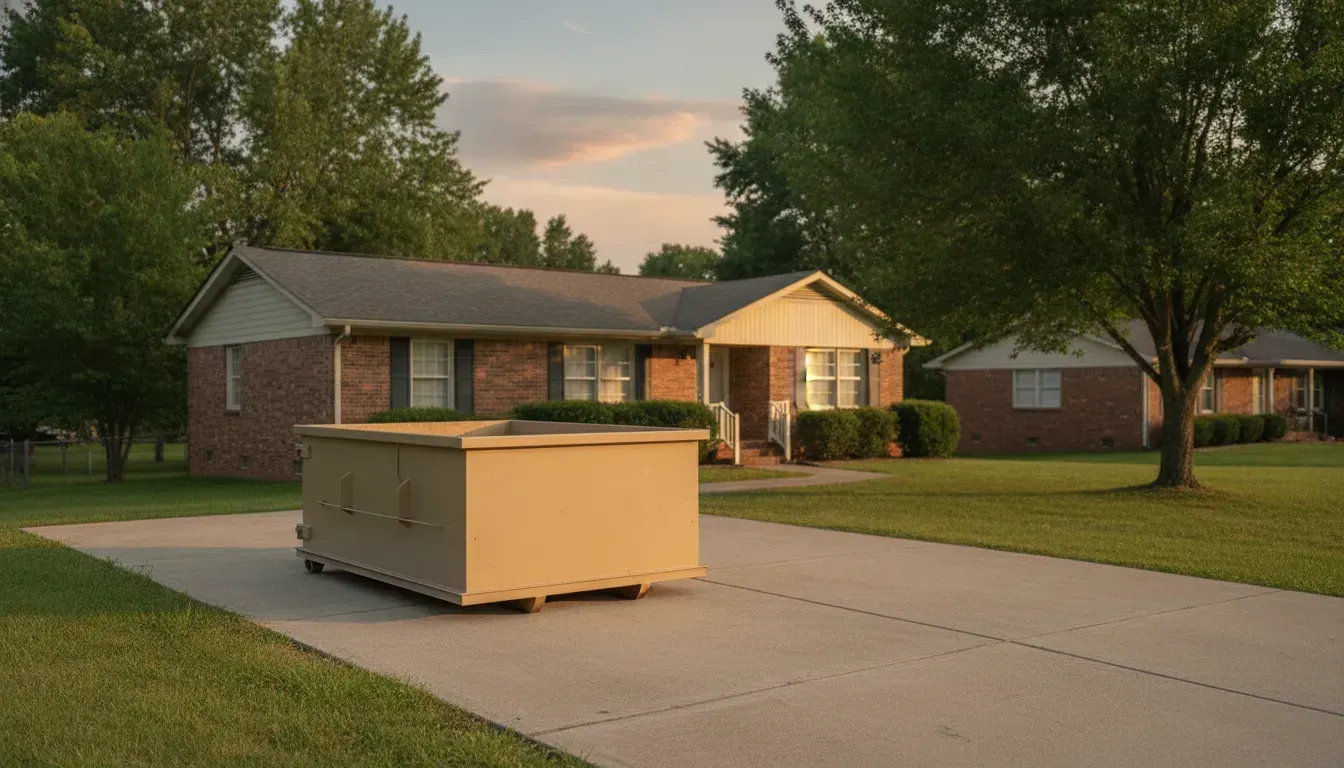
Look at the length and width of the space, then consider what must remain usable during the rental. A garage door may need to open. A household may need to park one vehicle. A side gate might be the shortest route from the yard. Mark the proposed container outline with cones or another visible marker if that helps you picture the arrangement. Do not place markers where they create a trip hazard, and remove them before the truck arrives if they could obstruct access.
- Check the narrowest point on the route from the street to the intended placement area.
- Look up and around the route for branches, eaves, wires, signs, and other fixed obstacles.
- Note slopes, soft ground, drainage grates, surface edges, roots, and changes in pavement.
- Identify doors, walkways, parking spaces, gates, or work zones that need to stay accessible.
- Take clear photos from the street and from the proposed placement point to explain unusual conditions.
Measurements and photos help describe a site, but they do not replace a delivery review. Be direct about uncertainty. For example, say that a shared drive is clear in the morning but usually has vehicles in it later, or that the driveway slopes toward a drain. The provider can discuss the plan with you, but an online article cannot inspect or certify a particular surface.
How should you prepare a driveway surface?
Choose the firmest, most level accessible area that fits the plan, and tell the provider about surface concerns. A driveway can look solid while having a fragile edge, decorative pavers, a recently repaired section, or a drain cover that should not bear heavy loads. If the property has asphalt, concrete, pavers, gravel, or another surface, describe it accurately. Mention cracks or other existing conditions before placement so everyone is discussing the same starting point.
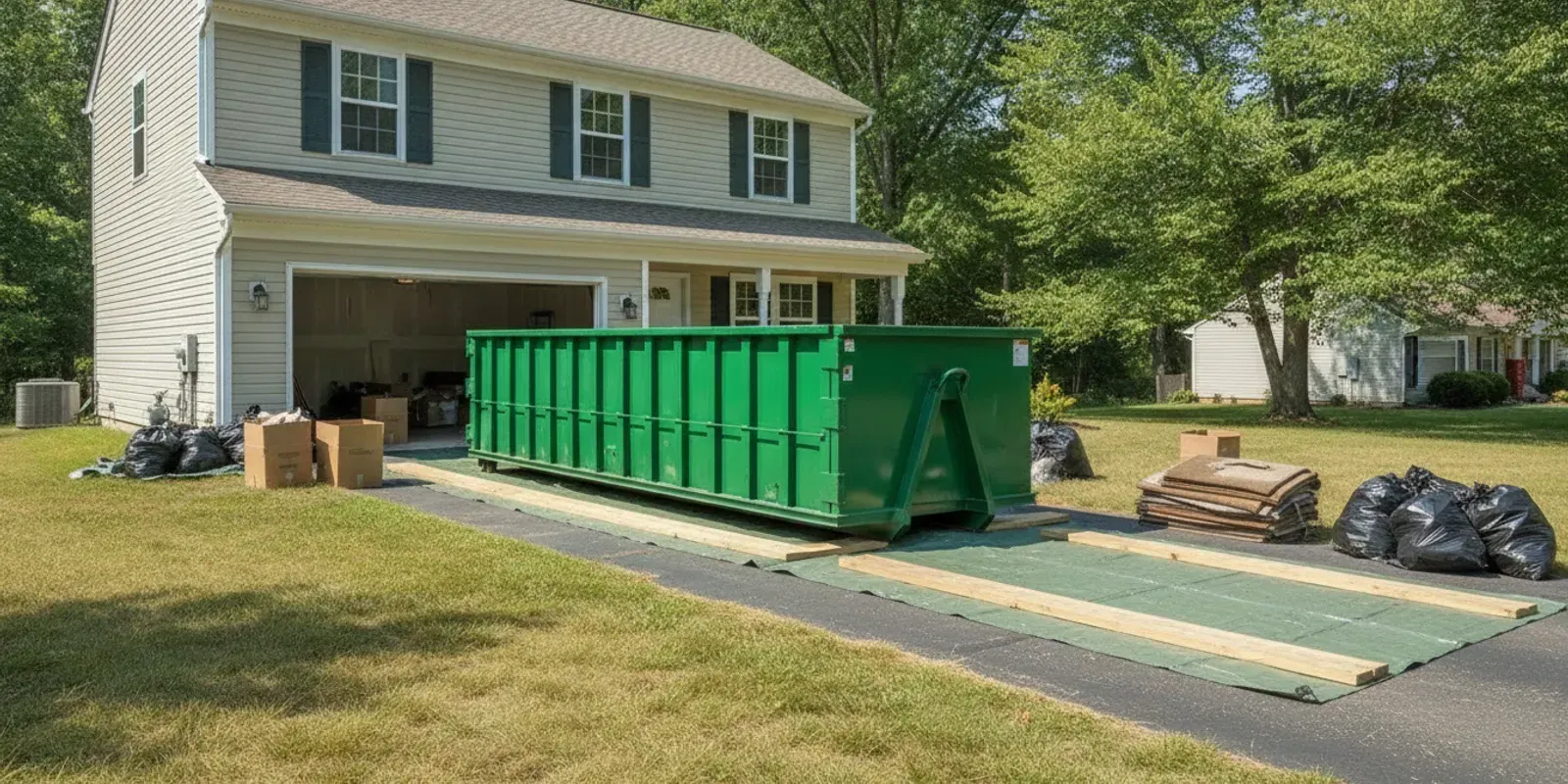
Rapid Removal can provide protective planks when necessary. That is a placement practice, not a written guarantee against surface damage. If you are especially concerned about a surface, explain why and ask how placement can be approached. Do not assume that planks eliminate every risk or that every site is suitable. The driveway placement information describes the company's approach; the specific plan still needs to account for your property.
Check the route for soft shoulders and areas that could become muddy after rain. A location beside a lawn might seem convenient, but soft ground or a sloped edge can complicate placement and pickup. Avoid choosing a spot simply because it is out of sight. The truck must be able to reach it, the container must remain accessible, and loading should not require carrying heavy debris across a hazardous or obstructed path.
If you live in a neighborhood with an HOA, review its rules before delivery. Ask about temporary containers, placement, street visibility, and how long one may remain. Do not assume the provider can interpret or override an HOA rule. Where neighbors share access, tell them about the planned obstruction and agree on a workable time window before the delivery vehicle arrives.
What access details matter on delivery day?
A route can be clear when you first plan it and blocked by the time the truck arrives. Walk the route again the day before and the morning of delivery. Move cars, trailers, lawn equipment, loose materials, and portable bins. If a gate needs to be unlocked, arrange who will open it. If someone else controls a shared drive or work site, confirm access with that person instead of assuming the route will be available.
Think through the truck's full sequence: approach, placement, departure, and eventual pickup. A clear spot is not enough if a parked car prevents the truck from turning in. Overhanging branches or low structures may matter even when the driveway itself is wide. Tell the provider about work crews, deliveries, or other activity that could occupy the route. Do not expect a driver to move private property or enter an area you have not authorized.
Keep the planned space open during the rental. Do not stack lumber, tools, or project debris where the container needs to be accessed for pickup. If the job changes and construction equipment must use the same route, coordinate a new sequence rather than blocking the container and trying to shift it yourself. Ask the provider if an access issue arises; do not assume a loaded roll-off can be repositioned by the customer.
For a driveway with one entrance, plan household routines around the placement. Decide where vehicles will park, whether residents need to come and go, and which path stays open for pedestrians. Keep children and pets away from the delivery area. If a route crosses a walkway, explain how people will reach the home without walking through the truck's work area.
How can you map the route from the project to the dumpster?
The best container location is not always the closest point to the debris. It should balance truck access, surface concerns, loading convenience, and the way the property needs to function. Walk from each work area to the proposed spot. Count steps or note thresholds, stairs, narrow doors, gates, and turns. A route that seems short on a site plan may be difficult when carrying long boards, bulky furniture, or repeated loads.
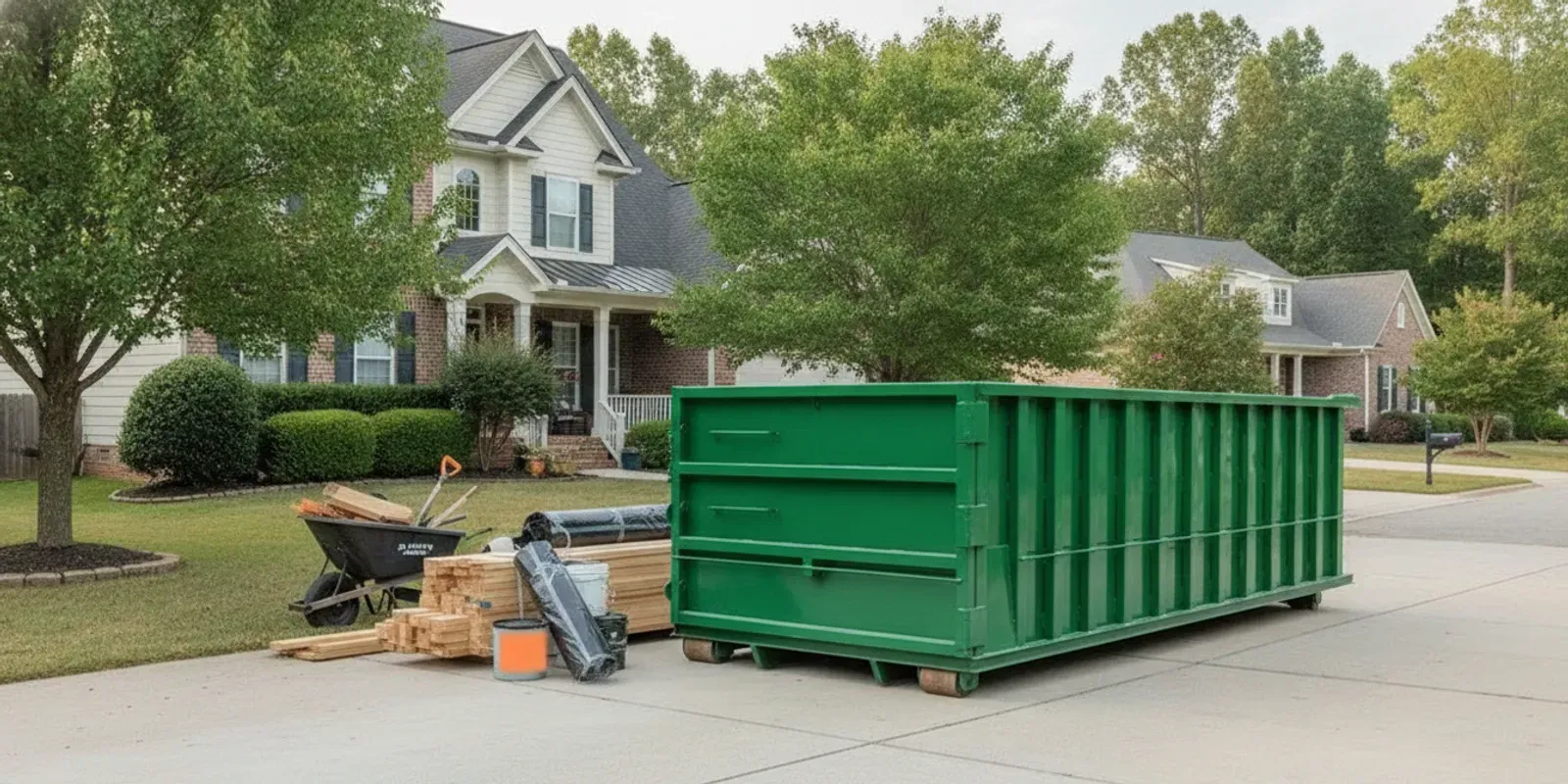
For an indoor renovation, think about protecting floors and keeping the route separate from tools and materials. Choose a path that does not cross an active work zone if another route is practical. For yard debris, check whether the gate is wide enough for the items being carried. For a garage cleanout, sort items close to the garage first, but keep the driveway route open for delivery and pickup. These small choices reduce double-handling and keep loose debris from spreading into household areas.
- Identify each room, garage, attic, or outdoor area that will contribute material.
- Choose the safest practical path from each area to the driveway.
- Remove trip hazards from the route and keep children, pets, and bystanders clear during carrying.
- Set a staging area near the work zone, without blocking doors or the container approach.
- Keep the route and the space around the roll-off open between loading sessions.
If the route is long, consider whether the job can be staged in sections. Complete one room or one outdoor area, then move to the next. This makes it easier to separate discard items from belongings to keep and helps you see how quickly the container is filling. Avoid leaving piles in a walkway or placing heavy items where someone must lift them twice.
How do you plan the rental period around real work time?
Estimate the total time required to sort, carry, load, and finish. The hands-on removal may take less time than the preparation around it. A homeowner working evenings may need multiple sessions. A contractor's schedule can shift. A move-out cleanout may need time to decide what to keep, while a landscaping project may depend on when branches and other material are gathered. Build your estimate from the whole sequence rather than the ideal uninterrupted workday.
The published rental periods for the 15-yard container are one day for $349, three days for $375, and seven days for $399, with no delivery fee advertised. These are the stated rates for those listed periods. Confirm the details for your address and project before relying on a price or rental end date. The chart below is a planning aid, not a promise that a particular job will fit a period or that other terms are included.
Published rental period: 1 day. Published price: $349. Planning question: Are materials already sorted, staged, and ready for a focused loading day?
Published rental period: 3 days. Published price: $375. Planning question: Do you need separate sessions for a room project, move, or cleanout?
Published rental period: 7 days. Published price: $399. Planning question: Will several work zones or household schedules require a longer window?
Consider a bathroom refresh as an example. If debris is already removed from the room and helpers are available, a shorter period may suit the work, but confirm your sequence and pickup timing. A multi-room renovation is different: demolition may happen first, then materials may accumulate as separate rooms are completed. A garage or attic cleanout can also take longer because the sorting decision is often slower than loading. Choose a period based on your actual plan, not just the number of items you expect to discard.
The dumpster cost guide and the listed rental details can help you frame questions, but confirm which terms apply to your request. The published prices above do not answer every possible question about accepted materials, additional time, or how the rental period is handled. Get those details from the company before the work begins. If you are uncertain about the volume, the container size guide can help you understand the documented dimensions, while the provider can discuss whether the 15-yard option fits your project.
How should you organize a renovation, cleanout, or landscaping job?
Before the container arrives, separate what is staying from what is leaving. Make distinct areas for keep, donate, recycle, and discard items when those choices apply. Mark the boundaries clearly so that helpers do not mistake useful belongings for debris. Keep uncertain items outside the loading pile until you have checked whether they may go in the container. Sorting before delivery keeps the rental period focused on removal rather than decision-making.
For a renovation, work room by room. Remove only the material that is ready to leave, and keep tools, replacement materials, and reusable fixtures out of the discard zone. If contractors are working, coordinate which items they will remove and which are for the homeowner to sort. A small written list can prevent a fixture, cabinet, or flooring bundle from being discarded by mistake.
For a move, sort by area and remove unwanted items before the final packing rush if possible. Keep boxes, donations, and household items to retain separate from demolition debris. For a yard cleanup, gather material in a controlled staging area and check in advance whether each type is accepted. The company’s general website guidance does not establish a universal material policy for every item, so ask about anything uncertain before loading it.
- List the major debris types and the rooms or outdoor areas they come from.
- Set aside keep, donate, recycle, and undecided items before loading begins.
- Check acceptance for materials that may be restricted or need special handling.
- Make a safe carry path and stage materials without blocking access.
- Load steadily, distribute materials across the container, and leave time for a final walk-through.
Do not use the rental as a reason to mix in household chemicals or other potentially restricted materials without checking first. Keep unknown or questionable items separated. Read the rental FAQ and ask the provider about specific items. Do not put anything into the container if you have not confirmed that it is accepted.
How can you load the container in a controlled way?
Plan a loading order before the first item goes in. Heavy, dense material can be placed first and distributed across the floor, rather than concentrated in one corner. Add lighter items around it. Keep the load balanced and below the container's top edge; do not pile material high above the rim. Uneven or over-the-edge loading can make pickup more difficult and may require you to adjust the load before removal.
Break down bulky items only when you can do so safely and lawfully. Use appropriate tools, protective equipment, and help for heavy or awkward objects. Do not climb into the container to rearrange material. Carry items with a clear path, and have one person watch for people entering the loading area if several helpers are working. Stop and reassess if an item is too heavy, unstable, or difficult to handle safely.
Leave space for late-stage debris instead of filling the entire container with the first room. As you work, compare what remains with the available space. If the container is approaching capacity sooner than expected, pause before loading more. Revisit the remaining materials and contact the company to ask what options are available rather than packing waste above the rim or leaving debris in a way that obstructs safe pickup.
What if the planned placement area is not available?
Prepare a backup location before delivery, especially if the preferred spot depends on a neighbor, shared driveway, temporary parking arrangement, or work area. The alternate space must also allow a suitable truck approach and leave the container accessible for pickup. Do not assume that a spot on the street, lawn, or another person's property can be used. Ask the provider whether the alternative is workable and check any applicable property or neighborhood requirements before you rely on it.
Make the primary and alternate choices easy to explain. Take a photo of each location and label them in your notes. Describe which one you prefer and why it may not be available. If the driveway has to remain open for a contractor or moving vehicle, include the timing conflict. A clear backup discussion can prevent confusion, but the final placement still needs to be confirmed with the provider and property owner where relevant.
Also decide what happens if the route becomes blocked on delivery day. For example, a vehicle might be parked where the truck needs to turn, or a scheduled repair could occupy the driveway. Identify who can move the vehicle or contact the contractor, and do so before the arrival window. If an obstacle cannot be cleared safely, notify the provider instead of asking the driver to improvise around it.
For a shared driveway, tell household members and neighbors when the placement area will be needed and how long the container may remain there. Avoid making promises about timing until the company has confirmed the schedule. If there is no acceptable alternate spot, resolve that question before arranging the rental rather than treating it as a minor delivery-day detail.
What changes for common Lascassas project types?
Home renovation
Renovations often create debris in stages. Demolition may happen before installation, and one room may need to remain accessible while another is under construction. Locate the roll-off so the crew can use the work route without blocking doors, vehicles, or materials deliveries. Ask the contractor which debris the crew expects to generate, then compare that list with the household's own cleanup. Keep items to reuse in a separate area.
Moving or household cleanout
A move combines sorting with a deadline. Make a room-by-room list and decide which items are donations, packed belongings, and discard material. Keep the path to the dumpster separate from moving boxes if possible. If a moving truck and roll-off will use the same driveway, plan the order and access windows so neither vehicle blocks the other's route. Confirm this arrangement with the provider instead of assuming both can be positioned at once.
Landscaping and yard work
Yard projects may involve branches, soil, old edging, or mixed materials. Gather material where it can be reached without dragging it across a soft lawn or blocking the delivery route. Ask about specific material acceptance before loading, particularly when the debris is mixed or unusually heavy. Keep branches and long pieces arranged safely, and do not allow them to extend over the container edge.
Garage, attic, or storage cleanup
These projects often take time because belongings must be reviewed before they are discarded. Set a clear decision area near the space being cleaned, but not in the driveway approach. Move items in manageable batches. Keep the roll-off accessible for the entire rental, and plan extra time for sorting if family members need to review stored belongings.
What should you ask before confirming the request?
Use the request conversation to close practical gaps. Provide the Lascassas address and project type, describe the driveway and approach, and explain the preferred location. Ask whether the address and date can be served, what placement details the driver needs, and how the rental period and pickup are confirmed. If surface protection or a special access arrangement matters, bring it up before accepting the plan.
- Is the requested address within the current service area, and is the preferred date available?
- Does the proposed route and placement spot appear workable based on the details and photos provided?
- What is the confirmed rental period, and how should pickup timing be coordinated?
- Which materials are accepted, and should any specific items be kept out?
- What should you do if the project takes longer or the container fills sooner than expected?
Rapid Removal advertises same-day options, but availability depends on the circumstances. The service request form is a request for follow-up, not a confirmed booking. If the timing is urgent, use the details on the contact page to discuss availability directly. The business lists service in English and Spanish. Once a representative confirms the delivery details, share the agreed plan with anyone who will be working at the property.
How can you build a simple delivery-day checklist?
A short checklist helps turn the plan into action. The day before delivery, move vehicles and movable equipment, verify gate access, and make sure the placement area has not become a staging zone for other project supplies. Recheck overhead and side clearance. If the weather or work schedule changed conditions, contact the provider rather than assuming the original arrangement still works.
- Confirm the address, requested delivery date, rental period, and placement plan with the provider.
- Clear the approach, driveway area, and route to the selected spot.
- Arrange gate access and coordinate with household members, neighbors, or contractors.
- Move children and pets away from the work area during delivery and pickup.
- Keep the container accessible and load only materials you have confirmed are accepted.
- Leave the load level and below the top edge, then coordinate pickup using the agreed instructions.
After placement, check that the roll-off sits where you expected and that the intended path remains usable. If the position creates an unexpected obstruction, contact the provider promptly rather than trying to move the container. Keep the driveway and loading area orderly between work sessions. At the end of the job, make sure no project materials are left where they could interfere with pickup.
How do you make a clear Request a Service?
A complete request can help the company assess the job without repeated questions. Include the address, project type, preferred date, and likely rental period. Describe the driveway surface, slope, access route, clearance issues, shared-drive conditions, and any HOA or neighbor restrictions. Mention whether the route needs to remain open for residents, a contractor, or another vehicle. Photos can clarify a tight turn or unusual placement area.
Ask for confirmation of the points that affect your plan: whether the address and date are available, where the container is expected to sit, what period is being requested, and how to coordinate pickup. Keep the response with your project notes and share it with helpers. Do not treat an online request as confirmation until the company responds. For common questions about rental and placement, review the FAQ and then ask directly about conditions specific to your property.
With the driveway measured, the truck route cleared, and the project timeline discussed, you can make a more informed request and prepare your Lascassas property for delivery.