Dumpster Sizes: Dimensions, Capacity & How to Choose
Find out how dumpster sizes, dimensions, and capacity work so you can choose the right container for your project and avoid common rental mistakes.

A dumpster that looks big enough in a photo may not fit your driveway, your debris, or your budget. That’s why choosing between common dumpster sizes takes more than guessing based on the project. Roll-off containers usually range from 10 to 40 cubic yards, but the same listed size can have different dimensions depending on the provider. Your debris also matters: bulky furniture can take up space quickly, while concrete or soil can reach a weight limit before the dumpster is full. Here’s how to compare standard dumpster dimensions, estimate what your project needs, and check the details that can affect delivery, loading, and rental costs.
Key Takeaways
Choose a size based on volume and material: Estimate your debris, then account for bulky items and dense materials that may reach the weight limit early.
Confirm the container’s details before booking: Ask for exact dimensions, weight allowance, accepted materials, fill-line rules, rental period, and any additional fees.
Prepare the delivery site ahead of time: Measure the placement area and truck access route, check overhead clearance, and confirm whether a permit is needed.
What Are Standard Dumpster Sizes and Dimensions?
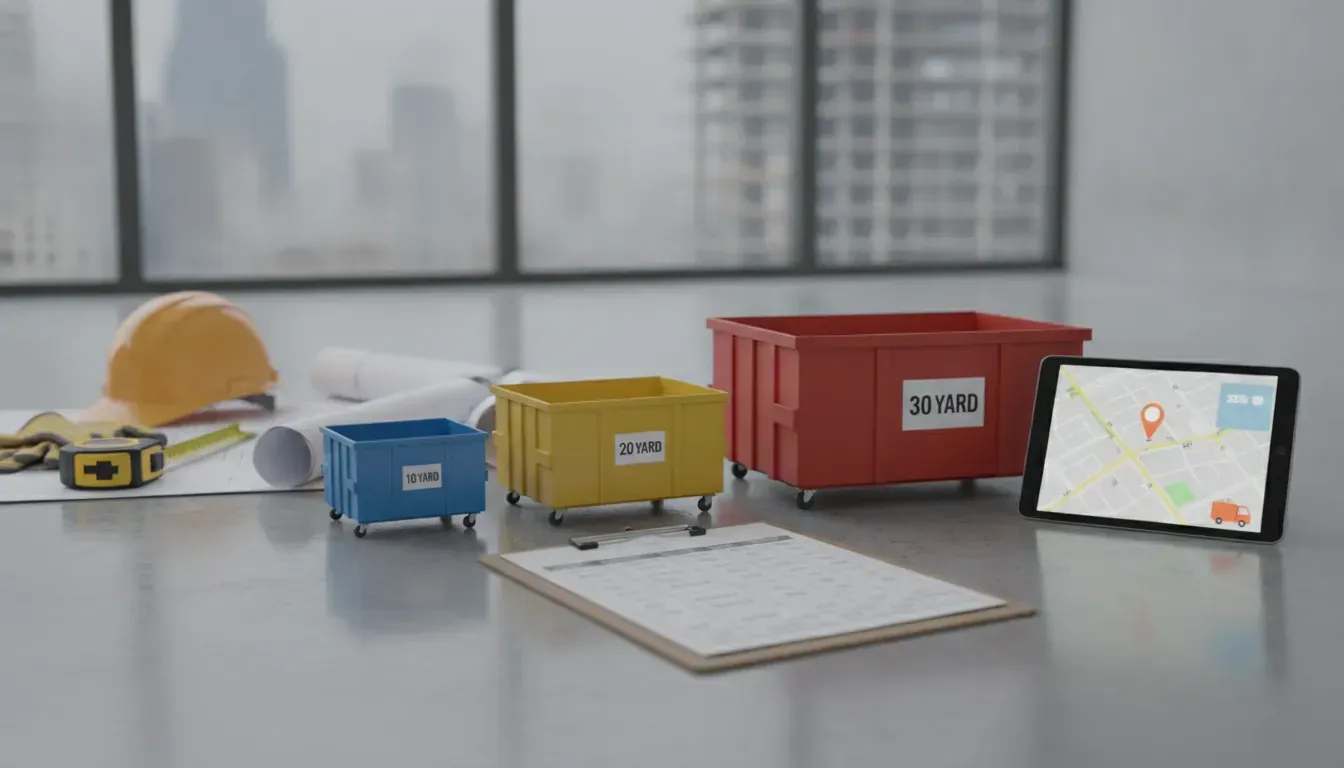
Roll-off dumpsters are commonly available in 10-, 15-, 20-, 30-, and 40-cubic-yard sizes. The yard measurement describes the container’s approximate volume, not its length or height. A 20-yard dumpster, for example, holds about 20 cubic yards of debris, but its footprint and wall height can differ from another company’s 20-yard model.
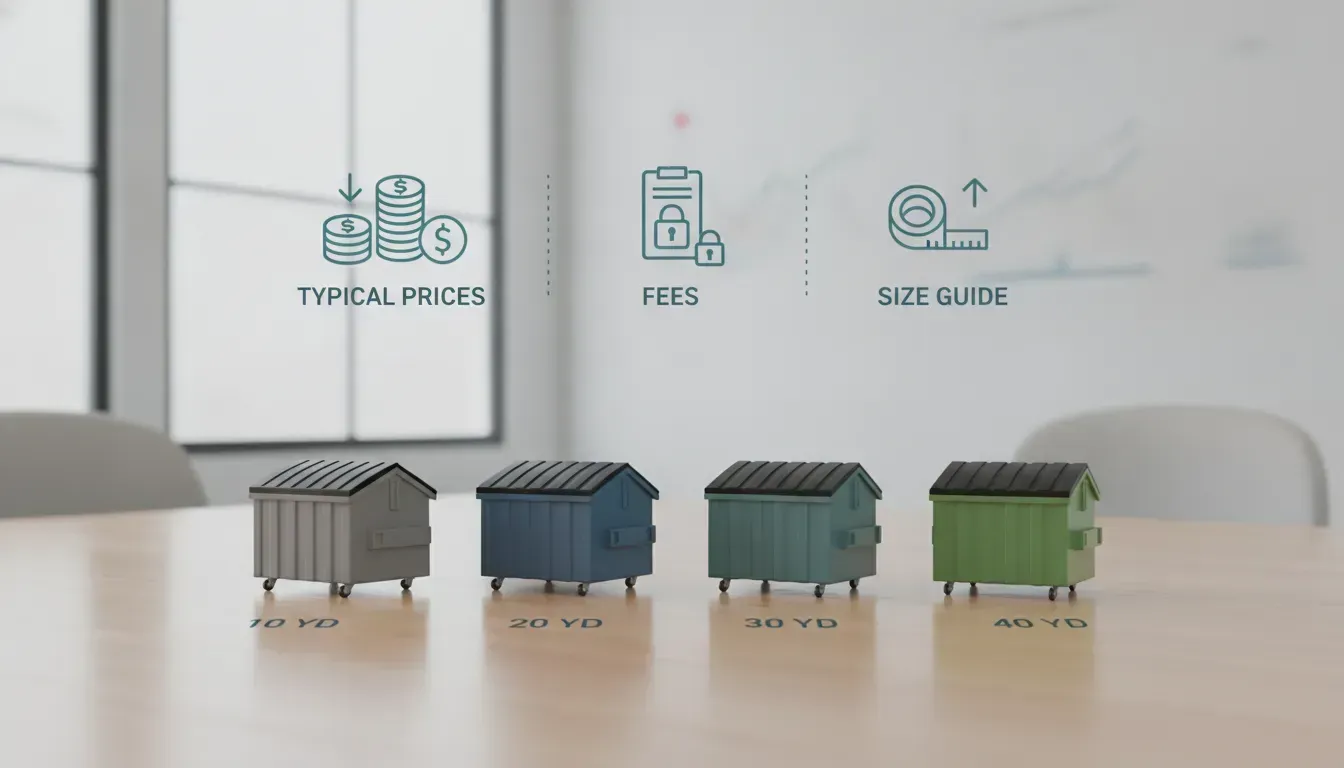
The dimensions below are typical estimates, not industry-wide standards. Providers may use containers with different proportions, and published measurements may refer to the outside of the container. Use these figures to compare options, then confirm the exact dimensions and capacity of the dumpster you’ll rent. Waste Connections’ size guide offers a reference for common container sizes.
Volume is only one factor in choosing a dumpster. The type and weight of your debris, the container’s fill line, and the rental’s weight allowance all affect how much you can dispose of. Before booking, check the provider’s dimensions, loading requirements, and rental terms. If you’re unsure which size fits your project, share details about the debris and placement area with the rental company.
10-yard: about 10 cubic yards; roughly 12 × 8 × 4 feet
A 10-yard dumpster holds about 10 cubic yards of debris and is typically around 12 feet long, 8 feet wide, and 4 feet high. Its lower walls can make it easier to load by hand than a taller container, while still providing space for debris from a smaller project.
These measurements are estimates, so confirm the actual footprint before delivery, especially if the dumpster will sit in a narrow driveway or another tight spot. A dumpster size guide from Waste Connections can help you compare 10-yard containers with other common options. Also ask about the weight allowance if you plan to load dense materials. Keep debris below the fill line and follow the provider’s loading instructions.
15-yard: about 15 cubic yards; roughly 14 × 8 × 4.5 feet
A 15-yard dumpster holds approximately 15 cubic yards and often measures about 14 feet long, 8 feet wide, and 4.5 feet high. It provides more volume than a 10-yard container while keeping a relatively compact footprint. Exact measurements can vary, so check the dimensions for the specific container your provider plans to deliver.
Think about both placement and loading before you rent. A dumpster may fit within the available space but still be difficult to access if there are parked cars, trees, or other obstacles nearby. Forever Clean’s sizing guide provides another reference for typical dimensions. Ask the rental company to confirm the container’s length, width, height, and weight allowance before booking.
20-yard: about 20 cubic yards; roughly 22 × 8 × 4.5 feet
A 20-yard dumpster holds about 20 cubic yards of material and is often roughly 22 feet long, 8 feet wide, and 4.5 feet high. Those measurements are approximate, and the container’s proportions can differ from one provider to another. Check the exact footprint to make sure it will fit in your planned placement area.
Leave enough space for the delivery truck to lower and retrieve the container, and review the weight allowance alongside the volume. A dumpster can reach its weight limit before it looks full, particularly when loaded with dense debris. Waste Connections’ dumpster guide lists common sizes for comparison. Your rental provider can confirm the measurements and terms for its 20-yard model.
30-yard: about 30 cubic yards; roughly 22 × 8 × 6 feet
A 30-yard dumpster typically holds around 30 cubic yards and measures about 22 feet long, 8 feet wide, and 6 feet high. Its extra capacity often comes from taller sides, which can provide space for bulky items. However, the added height may make hand-loading more difficult, so consider how workers will place debris inside.
Check the container’s exact height and footprint before scheduling delivery. Make sure there is enough overhead clearance, and ask whether the provider has loading instructions or equipment recommendations. Waste Connections’ size chart offers a starting point for comparing common containers. For your rental, confirm the capacity, fill line, and weight limit, especially if the load will include heavy materials.
40-yard: about 40 cubic yards; roughly 22 × 8 × 8 feet
A 40-yard dumpster is one of the largest standard roll-off options, with a capacity of about 40 cubic yards. It is often around 22 feet long, 8 feet wide, and 8 feet high. Because the sides are tall, consider how workers will load it safely and whether the provider offers equipment or guidance for reaching the top.
A large volume does not mean unlimited weight. Dense debris can reach the container’s weight allowance before it is full, so review the rental terms and material restrictions before loading. Waste Connections’ dumpster size guide provides a general reference for 40-yard dimensions. Confirm the exact height and weight limit with your provider, and keep all debris below the fill line.
Why provider dimensions and truck-load comparisons vary
Dumpster dimensions vary because companies may use containers with different lengths, widths, and wall heights. A size label, such as 20 yards, refers to approximate volume, but it does not guarantee that every 20-yard container has the same footprint. Published measurements can also differ depending on how a provider measures its containers.
Pickup-truck comparisons are useful for picturing capacity, but they are not precise. The amount a truck can carry depends on its bed size, the material, and how the load is arranged. Treat these comparisons as a rough visual guide, not a direct calculation. McGree Trucking’s sizing advice recommends matching the container to the project rather than relying on the size label alone.
Before booking, ask the rental company for the container’s exact dimensions, weight allowance, included tonnage, and loading rules. Describe your debris and estimated volume so the provider can help you compare suitable options.
Which Dumpster Size Fits Your Project?
The right dumpster size depends on how much debris your project will produce, what that debris is made of, and how much room you have for the container. A small bathroom update may only need a 10-yard dumpster, while a full renovation or demolition can call for a 30- or 40-yard option. Project type is a helpful starting point, but it doesn’t tell the whole story. Bulky items can fill a container quickly, and heavy materials may reach the weight limit while there’s still room inside.
Use the options below to narrow your choices. Dumpster dimensions and weight allowances vary by provider, so check those details before booking. Waste Connections’ size guide offers a useful overview of common container sizes and project types. It’s also worth confirming which materials are accepted, how long your rental lasts, and whether the provider has specific fill-line rules. If you’re unsure, describe your project and debris to the rental provider and ask them to review your estimate.
10-yard: small cleanouts, yard waste, and minor renovations
A 10-yard dumpster can suit a focused project with a modest amount of debris. Consider it for clearing a basement or attic, disposing of yard waste, or removing materials during a small bathroom or closet renovation. It typically holds about three pickup truck loads, though the comparison is only a rough estimate. Debris size and loading method affect how much will fit.
Check the provider’s measurements before you reserve, since dimensions can vary. A 10-yard container is often a practical choice when you have limited space for placement or expect to generate debris over a short period. If your project includes dense materials such as tile or soil, ask about the weight allowance. The container may reach its limit before it is full by volume.
15-yard: basement cleanouts, small remodels, and roofing shingles
A 15-yard dumpster offers more capacity for a substantial cleanout or small renovation. It may work well for removing basement clutter, clearing out materials from a small remodel, or handling debris from a roofing project. Some providers estimate that this size holds up to 100 trash bags, but the actual amount depends on bag size, contents, and how they’re loaded.
Roofing shingles can add weight quickly, so check the weight allowance before choosing this size. Forever Clean’s dumpster sizing guide outlines common capacity estimates and uses. When you contact a rental provider, share what you’re removing and how much you expect to generate. That information can help them determine whether a 15-yard container fits your project.
20-yard: larger renovations, flooring, drywall, and bulky cleanouts
A 20-yard dumpster is often a good fit for larger home projects, including flooring removal, drywall disposal, or a cleanout involving bulky furniture. It can also work for roofing jobs and renovations that involve several rooms. As a general visual guide, some providers compare its capacity to about six pickup truck loads.
Before renting, check the container’s exact dimensions, especially if you’ll be loading long or awkward materials. Capacity in cubic yards doesn’t always show how easily items will fit. Also ask about the weight limit if your project includes tile, shingles, or other dense debris. Waste Connections’ dimensions guide lists common 20-yard measurements and uses, but your provider’s container may differ.
30-yard: large remodels, construction debris, and commercial cleanouts
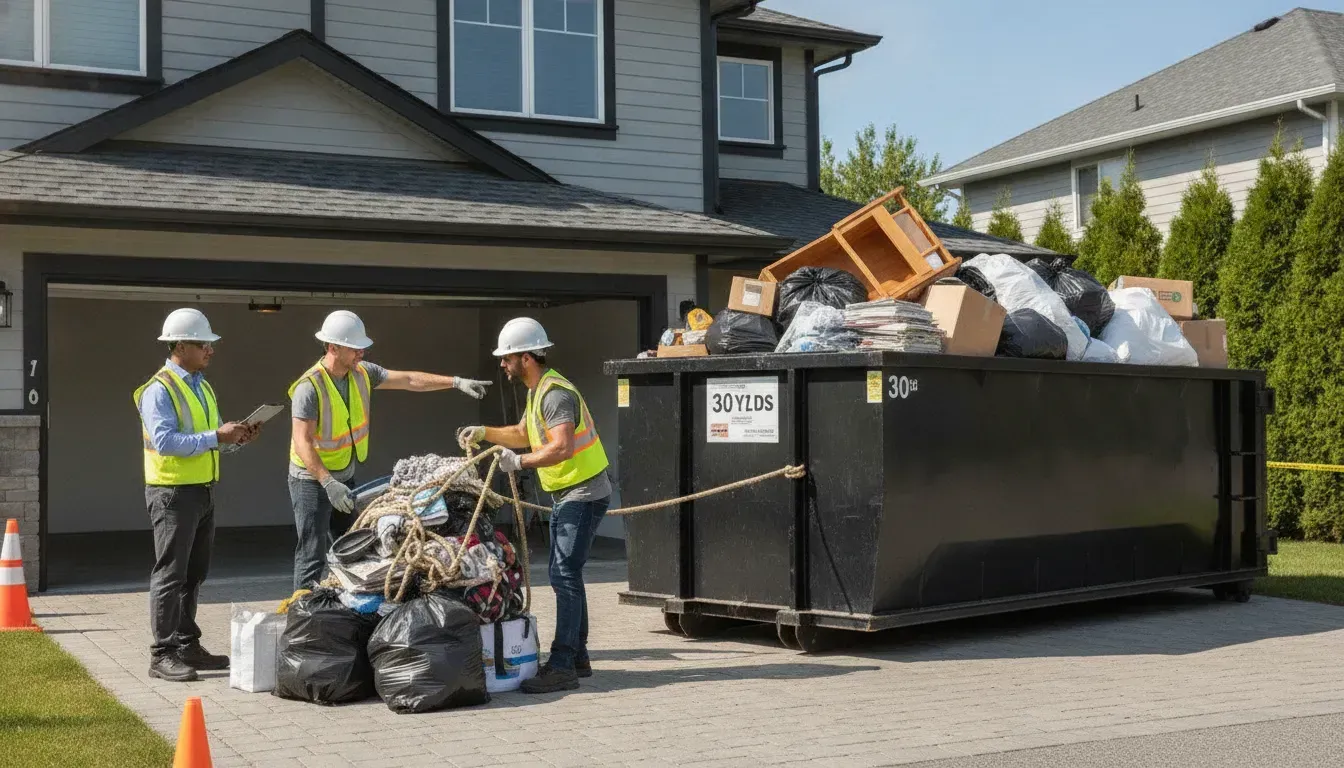
For a large remodel, construction job, or commercial cleanout, a 30-yard dumpster provides room for a higher volume of debris. It may be suitable when several rooms are being renovated or when materials such as wood, drywall, and fixtures will accumulate over time. Some providers compare this size to about 10 pickup truck loads, though the amount depends on the debris and how it’s loaded.
Check that the container will fit in your placement area and confirm that the provider accepts your materials. Ask about the weight allowance and pickup schedule, particularly if debris will build up over several days. A 30-yard dumpster can be a useful option for bulky, lower-density waste, but dense materials may reach the weight limit before you use all the available space.
40-yard: major construction, demolition, and large-scale cleanouts
A 40-yard dumpster is intended for projects that generate a large volume of debris, such as major construction, demolition, or a commercial cleanout. Its capacity may reduce the need for multiple smaller containers or frequent pickups. However, the largest option isn’t automatically the best fit. Heavy materials can reach the weight limit before the dumpster is full by volume.
Confirm the container’s dimensions, weight allowance, and accepted materials before booking. You’ll also need to make sure the delivery truck can reach the placement area and has enough room to drop off and remove the container. For concrete, soil, or other dense debris, ask the provider whether a smaller container or a separate disposal plan would be a better fit.
How Do You Estimate the Right Dumpster Size?
Start by estimating how much debris your project will produce, then check how its weight and shape could affect the space you need. Measuring gives you a useful baseline, while a rental provider can help you account for material limits and container options.
Measure the debris pile and convert cubic feet to cubic yards
For a roughly box-shaped pile, measure its length, width, and height in feet. Multiply the measurements to estimate the volume in cubic feet, then divide by 27 to convert that figure to cubic yards, the unit commonly used for dumpster capacity.
For example, a pile measuring 6 feet long, 4 feet wide, and 3 feet high contains about 72 cubic feet, or 2.7 cubic yards. Treat this as a starting estimate: debris piles are rarely uniform, and measurements won’t account for gaps between objects. Also identify what materials you’re removing, since dense debris can reach a weight limit before it fills the container. The NewSouth Waste sizing guide recommends estimating both volume and weight.
Account for bulky items, irregular shapes, and loading methods
A debris pile’s measurements may not reflect how much room it will take up in a dumpster. Sofas, cabinets, branches, and other bulky items can leave empty pockets when loaded. Long pieces of lumber or trim may also need to lie flat, making them harder to stack efficiently.
Consider how you’ll prepare and load each item. Breaking down boxes, disassembling furniture, and cutting branches into manageable lengths can help you use the container space well. Keep debris below the fill line, and don’t load items so they stick out over the sides. Before delivery, think about whether you’ll have enough space to load the container safely. Placement rules vary by location, so check local dumpster placement requirements when planning where it will sit.
Use pickup-truck loads as a rough visual guide
If measuring the pile is difficult, estimate how many pickup-truck loads it might take to haul the debris away. This comparison can help with an initial estimate, particularly for a garage cleanout or small renovation. Keep in mind that truck beds vary in size, and the way items are loaded affects how much each trip can hold.
NewSouth Waste estimates that a 10-yard dumpster holds about three pickup-truck loads. Use that figure as a general reference, not a precise conversion. Heavy materials may reach the weight limit while space remains, and bulky items can fill a container quickly. When you contact a rental provider, share your truck-load estimate along with the types of debris you expect to discard.
Allow for extra debris without oversizing
It’s common to uncover more debris once a project gets underway. You might find damaged flooring under a carpet, clear more storage space than planned, or decide to remove additional yard waste. Make a list of likely extras before booking, and leave reasonable room for them in your estimate.
Avoid choosing a much larger container just in case. It may cost more than you need, while a dumpster that’s too small can overflow or require an extra pickup. Consider whether some items can be donated or recycled, too. If your plans change during the project, ask the provider about your options before adding debris. Keep everything within the fill line, and confirm any extra-pickup costs so you can weigh them against changing your container size.
Ask the rental provider to review your estimate
Before you book, tell the rental provider what the project involves, which materials you’re removing, and how much debris you expect. Share your measurements or pickup-truck estimate, and mention bulky or unusually shaped items. This gives the provider useful details to recommend a container and explain its weight allowance, accepted materials, and potential overage charges.
Ask about delivery access and placement as well. If you plan to put the dumpster on a street or another public area, check whether a permit is required. A provider familiar with local requirements can help explain what to do. Klumm Bros’ dumpster rental advice recommends confirming permit requirements with your rental company before delivery.
How Do Debris Type and Weight Limits Shape Your Choice?
A dumpster’s capacity is only part of the decision. The kind of debris you’re tossing, its weight, and the rental provider’s disposal rules can all affect which size works for your project. Check these details before you book to plan for a suitable container and avoid unexpected fees.
Match dumpster capacity to debris volume and density
Estimate both how much debris you’ll have and what it’s made of. Bulky, lightweight items can fill a dumpster before reaching its weight limit, while dense materials may reach the limit with space still available. A 10-yard container may work for a small cleanup, while a larger renovation or demolition project may call for a 30-yard dumpster. Use your estimated debris volume as a starting point, then account for its density. A dumpster sizing guide can help you compare common capacities. Share your project details with the rental provider, too, since container dimensions and recommendations can vary.
Check weight allowances, included tonnage, and overage fees
Ask how much weight your rental includes and what fees apply if your load goes over that amount. Providers may charge for excess weight, and an overloaded container may not be eligible for pickup. Before booking, confirm the included tonnage, any overage fees, and how the provider handles loads that exceed the limit. If you’re disposing of dense materials or aren’t sure how heavy the debris will be, describe the materials and estimated quantity to the provider. That information can help you choose a container and plan your loading. Review these common dumpster rental mistakes so you know which questions to ask before scheduling delivery.
Ask about limits for concrete, soil, roofing, and other heavy debris
Concrete, soil, brick, and roofing shingles can add weight quickly. Some providers set separate limits for these materials or require a specific container, even if the debris fits inside a standard dumpster. Before renting, tell the provider what you plan to discard and roughly how much you have. Ask whether those materials are accepted, whether they have a dedicated weight limit, and how they should be loaded. You may need to dispose of dense debris in smaller quantities to stay within the allowance. Clarifying the rules can help you choose an appropriate container and avoid a rejected load. Check the provider’s guidance on heavy debris before work begins.
Confirm prohibited materials and special disposal requirements
A dumpster rental may not accept every item from your cleanup. Hazardous materials, chemicals, flammable substances, batteries, tires, electronics, and some appliances may need separate handling. Rules vary by provider and location, so ask for a current list of prohibited items before loading the container. If you’re unsure whether an item is allowed, mention it when requesting a quote rather than assuming it can go in the dumpster. Planning for special disposal early helps keep restricted items separate from general debris and gives you time to find an appropriate disposal option. Review the provider’s requirements for restricted materials before starting your project.
Follow fill-line rules and keep debris inside the container
Keep debris below the marked fill line and within the dumpster’s walls. Overfilled containers can be unsafe to transport, may be refused for pickup, or can lead to extra charges. Break down bulky items when possible, distribute materials evenly, and don’t stack debris above the rim. If the container is nearing its fill line before the project is complete, contact the provider to discuss an extra haul or another dumpster. Check the provider’s loading rules as well, since requirements can differ. Following the recommended loading guidelines helps keep the container ready for collection.
Plan Site Access, Placement, and Permits
Choosing the right dumpster size is only part of a smooth rental. You also need a spot that fits the container, a clear route for the delivery truck, and enough room to load debris safely. Check the site before booking, then share any tight turns, gates, low branches, or other access concerns with the rental provider. These details can affect where the dumpster can be placed and whether the truck can deliver and retrieve it as planned.
Rules depend on where you live and where you want the dumpster placed. A container on private property may have different requirements from one placed on a public street or sidewalk. Contact your local permitting office to confirm what applies, and ask your provider for help with local placement practices. Planning ahead gives you time to secure permits, clear the route, and choose an accessible location before delivery day.
Measure the placement area and delivery and pickup access
Measure the intended placement area, then compare it with the dumpster’s actual dimensions. Sizes can vary between providers, so ask for measurements rather than relying on the listed capacity alone. Leave enough space for the container and for the truck to maneuver during delivery and pickup.
Check the full route from the street to the placement spot. A narrow driveway, gate, parked vehicle, or low branch could prevent the truck from reaching the site. If access is limited, tell the rental provider before booking so they can confirm whether delivery is possible and suggest another location. NewSouth Waste’s guide to choosing a dumpster size recommends checking available space and overhead clearance before arranging delivery.
Check driveway strength, overhead clearance, and loading access
Think about the surface as well as the available space. A loaded dumpster can put significant pressure on a driveway or other placement area. If you’re concerned about the ground or pavement, ask the rental provider for advice about suitable placement and whether they offer surface protection.
Look overhead for tree limbs, utility lines, roof edges, or other obstacles that could interfere with delivery and pickup. Then consider how you’ll carry debris to the dumpster. Choose a location with a clear, practical loading path, and keep the route free of obstacles. Checking site conditions before delivery can help you spot clearance or access issues early and discuss them with your provider.
Confirm placement rules and street-use permit requirements
Permit requirements vary by location. A dumpster placed on private property may not need a permit, while a container on a public street or sidewalk often does. Contact your city or local permitting office to check the rules, application timeline, fees, and any requirements for signs or barriers. Get approval before the scheduled delivery if a permit is required.
Your rental provider may be familiar with local regulations and can help explain the process. Still, confirm requirements with the appropriate local authority, since rules can differ between cities and neighborhoods. Klumm Bros recommends checking local regulations before placing a container on public property in its guide to avoiding dumpster rental mistakes. Share your planned location with the provider so they can flag potential placement concerns before delivery.
Keep sidewalks, fire hydrants, and access points clear
Place the dumpster where it won’t block sidewalks, driveways, fire hydrants, stop signs, entrances, or emergency access routes. Keep enough room for pedestrians, neighbors, and vehicles to pass safely. If street placement is allowed, check whether local rules call for cautionary signs, barriers, or a designated placement area.
Before delivery, walk through the site and check what the container might obstruct once it’s in place. If you’re uncertain about a location, ask your provider or local permitting office to review it. Keeping access points clear can help prevent safety concerns and placement problems. Local dumpster regulations also explain why sidewalks, hydrants, driveways, and signs need to remain accessible.
Compare Rental Costs and Terms
A dumpster rental quote should spell out more than the container price. Compare the rental period, included services, weight allowance, and fees for changes before you book. A clear quote makes it easier to match the rental to your project and avoid unexpected costs.
Compare rental periods, delivery fees, and extra charges
Ask each provider for an itemized quote. Check whether the price includes delivery, pickup, disposal, and a set rental period. Confirm the weight allowance and ask what you’ll pay if your load exceeds it or you need the dumpster for extra days. Fees can also vary by location and debris type, so compare quotes using the same project details.
If your schedule may shift, ask about extension fees before booking. Some providers charge by the day, while others may use a different schedule. NewSouth Waste’s guide to dumpster costs and project planning explains how rental length, disposal fees, and waste type can affect the total.
Confirm your preferred size and pickup schedule
Once you’ve estimated the amount of debris, check that your preferred dumpster size is available for your delivery date. Choose a rental period that allows time to complete the work, including cleanup and possible delays. If the container fills before the project ends, ask whether the provider can pick it up early or swap it for an empty one.
Find out how much notice is needed to schedule pickup and whether the rental period ends when you request pickup or when the container is removed. If your project grows, ask whether you can change sizes and how that affects the price and delivery schedule. Confirming these details in advance helps you plan the work without rushing to arrange a last-minute adjustment.
Consider recycling, multiple containers, or extra disposal trips
Before loading the dumpster, ask which materials the provider accepts and whether certain items need separate handling. Sorting recyclable materials, such as metal or clean wood, may help keep them apart from general debris. Hazardous materials often require specialized disposal, so check the provider’s rules and local requirements before placing anything in the container.
For a project with different types of debris, compare the cost of one larger dumpster with multiple containers or an extra disposal trip. The right option depends on the debris, weight limits, and space at your site. Review the provider’s guidance on waste types and disposal before work begins so you know how to handle materials that can’t go in a standard dumpster.
Recheck your size if the project scope or debris volume changes
Your original estimate may need an update if the project changes. Adding a room to a renovation, removing more flooring than expected, or uncovering extra debris can quickly affect how much container space you need. A dumpster that’s too small may require an additional haul, while a much larger one may cost more than the job calls for.
Contact the rental provider when you notice the scope or debris volume has changed. Ask whether a different size, a second container, or an extra pickup would be the most practical option. Confirm any price difference and check that the provider can meet your revised schedule. Reviewing your needs early gives you time to adjust the rental before the dumpster is full.
Avoid Common Dumpster-Size Mistakes
A little checking before you book can help you avoid extra fees, delivery delays, and disposal problems. Compare the container’s actual dimensions and rules with the debris you expect to remove.
Check each provider’s dimensions and weight limits
A dumpster’s capacity in cubic yards tells you its volume, not how much weight it can hold. One cubic yard equals 27 cubic feet, but containers with the same capacity can have different dimensions and weight allowances. Compare the measurements, included tonnage, rental period, and overage fees for the specific container you’re considering. Also think about how you’ll load it: bulky items may not fit through the opening, even when there seems to be room inside. Use a dumpster dimensions guide to understand common sizes, then confirm the exact specifications with your provider before booking.
Don’t choose by project type alone or assume bigger always costs less
Project categories such as “kitchen remodel” or “basement cleanout” offer a starting point, but they can’t tell you exactly how much debris you’ll have. A small renovation that includes heavy tile may need a different container than a larger project with lightweight materials. Estimate your debris volume, consider its weight, and compare both with the provider’s limits. A container that’s too small may require an extra haul or lead to added fees. A larger one may cost more without being necessary. Review your project details before choosing, and use this dumpster-size selection guide to think through the trade-offs.
Confirm which materials each dumpster accepts
Not every dumpster accepts every type of waste. Providers and local disposal rules may restrict items such as batteries, tires, electronics, and hazardous materials. Some debris needs separate handling, and placing restricted items in a container can result in extra charges or a delayed pickup. Before loading, ask your provider for its list of accepted materials and explain what you plan to dispose of. This matters especially for renovation and yard projects, which may involve paint, treated wood, soil, or other materials with special requirements. Checking the rules ahead of time helps you choose the right disposal option. This guide to common dumpster rental mistakes covers other issues to watch for.
Check weight limits, prohibited items, and placement rules before booking
Ask about the weight allowance and fees for exceeding it, especially if your load includes dense materials such as concrete, soil, shingles, or brick. Keep debris below the fill line and distribute it evenly so the container can be transported safely. Then confirm where the dumpster can go. Driveways, streets, and shared access areas may have different placement requirements, and placing a container on public property may require a permit. Measure the delivery area, check overhead clearance, and keep sidewalks, fire hydrants, and entrances clear. Contact your provider about local rules before scheduling delivery. These dumpster rental placement rules can help you plan the drop-off and avoid extra costs.
Frequently Asked Questions
Are dumpster sizes the same across rental companies?
No. A size such as 20 yards describes approximate volume, but the container’s length, width, and height can vary. Ask your provider for the exact dimensions before booking.
How do I choose the right dumpster size?
Estimate the debris volume, consider how bulky or heavy the materials are, and measure the planned placement area. Share those details with the rental provider to compare suitable sizes.
Can heavy debris fill a dumpster before it reaches the top?
Yes. Materials such as concrete, soil, brick, and shingles can reach the weight allowance while space remains. Ask about weight limits and special rules for these materials before loading.
Do I need a permit to place a dumpster on the street?
You may need one if the dumpster will sit on a street or sidewalk. Requirements vary by location, so check with your local permitting office and tell your rental provider where you plan to place it.
What should I compare when reviewing dumpster rental quotes?
Check the rental period, delivery and pickup charges, included weight allowance, overage fees, accepted materials, and extra-day costs. Comparing these terms alongside the container size can help you estimate the full rental cost.