Dumpster Rental in La Vergne, TN: Choosing the Right Dumpster
Planning a La Vergne renovation, move, or yard cleanup? Learn how to plan a driveway-conscious 15-yard dumpster rental, schedule, and delivery.
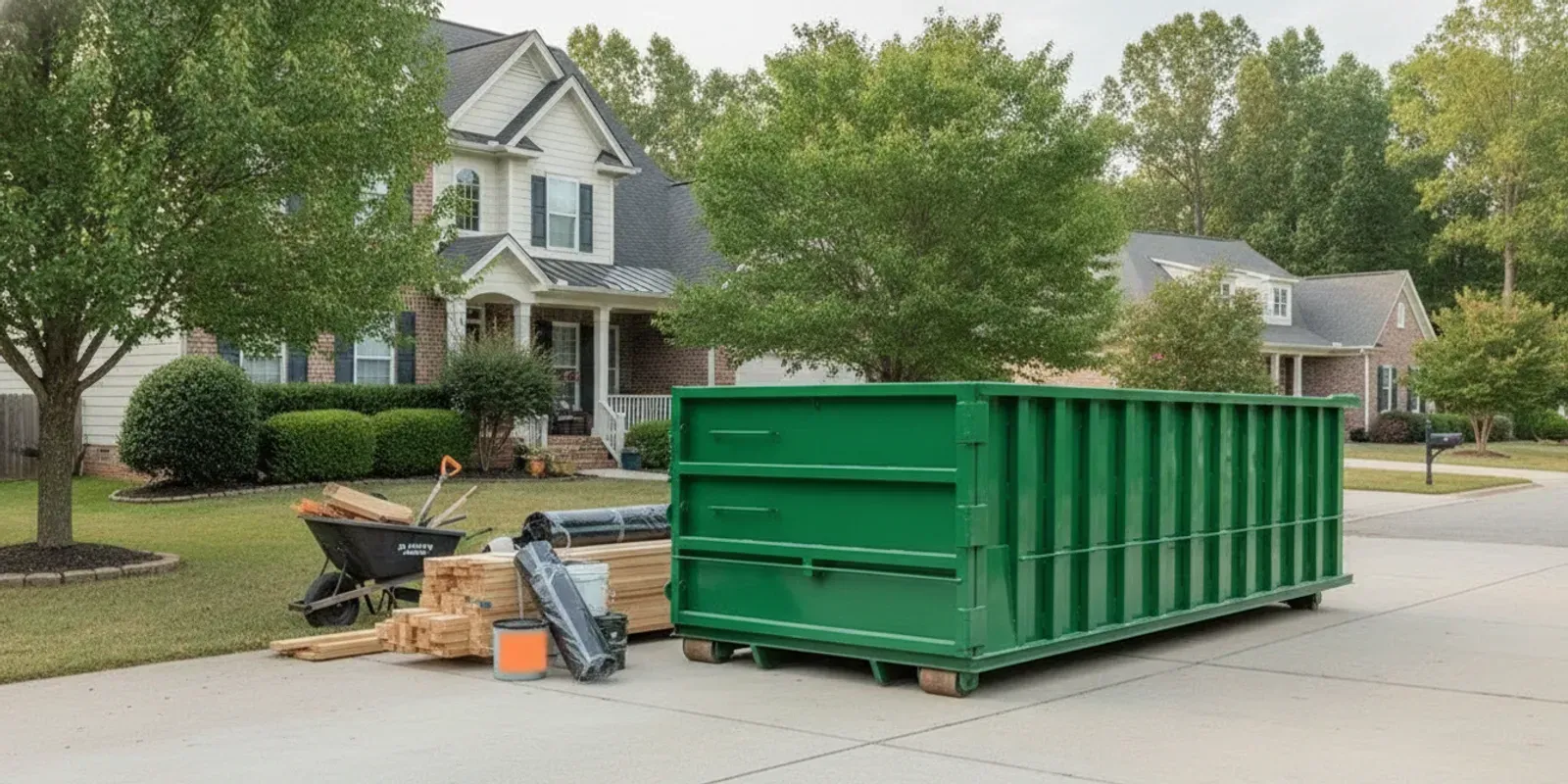
Planning a renovation, landscaping cleanup, or move can leave you with more debris than ordinary trash pickup can handle. A dumpster rental La Vergne TN homeowners can plan around gives you one place to collect eligible project waste while work is underway. Rapid Removal Dumpster offers a customer-loaded 15-yard roll-off rental and serves Rutherford County and nearby areas; confirm availability for your address and dates before making plans.
Request service for your project
When does a roll-off fit a La Vergne project?
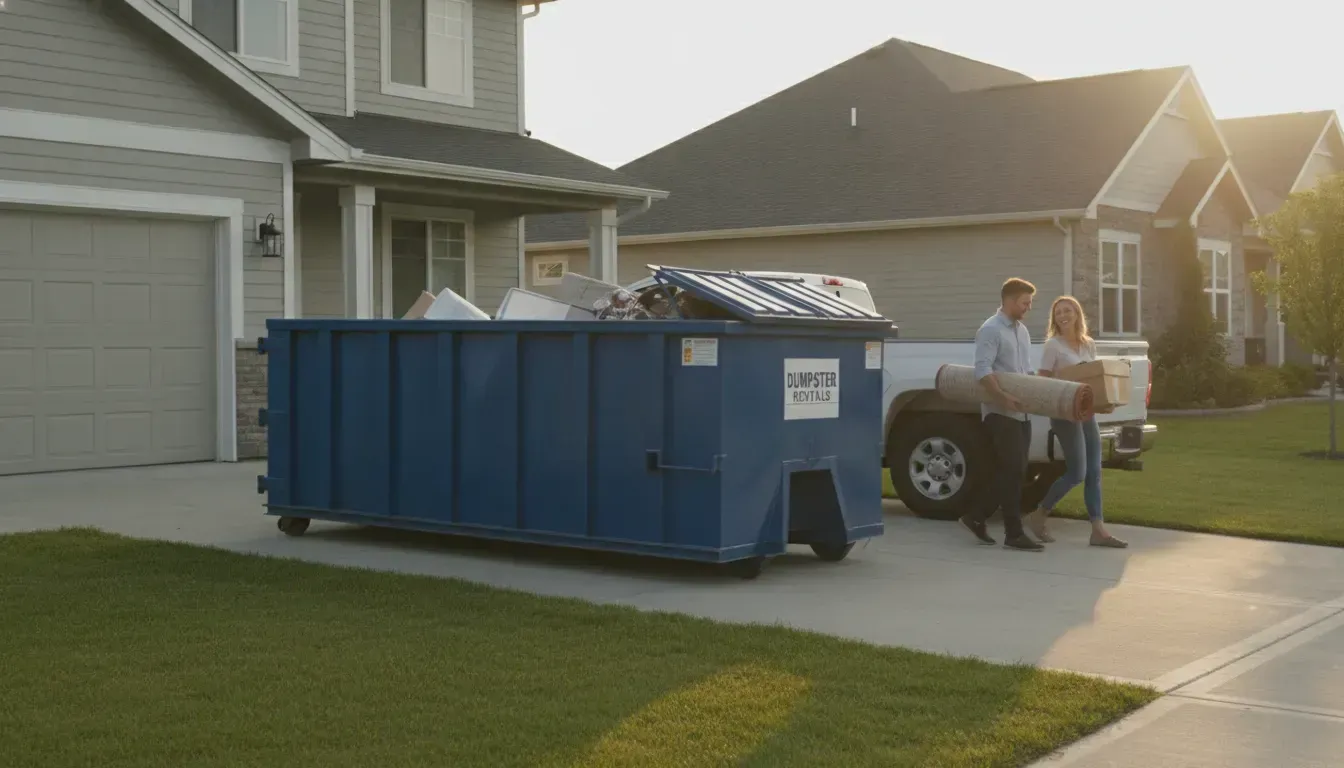
A roll-off can help when debris builds up over several work sessions, when you want to keep materials in one collection point, or when a project generates more than can conveniently go out with ordinary household trash. It is a rental container, not a crew that removes items from inside the house. You or your project team load the eligible material.
Think through how the work will happen. A bathroom renovation may produce packaging and removed fixtures at different stages. A move can generate unwanted furniture, boxes, and household items as rooms are sorted. A landscaping cleanup may create branches or other yard material. These examples do not mean every item is accepted: describe the exact materials to the provider before loading, especially if you have heavy, unusual, or mixed debris.
A container is most useful when the collection point is close enough to the work to be practical, yet positioned where the delivery vehicle can reach it and where it will not block essential access. The roll-off rental guide offers general context on planning delivery and use. For a La Vergne address, verify service eligibility directly rather than assuming that a nearby service area means every street and date is available.
What should La Vergne homeowners know about the 15-yard dumpster?
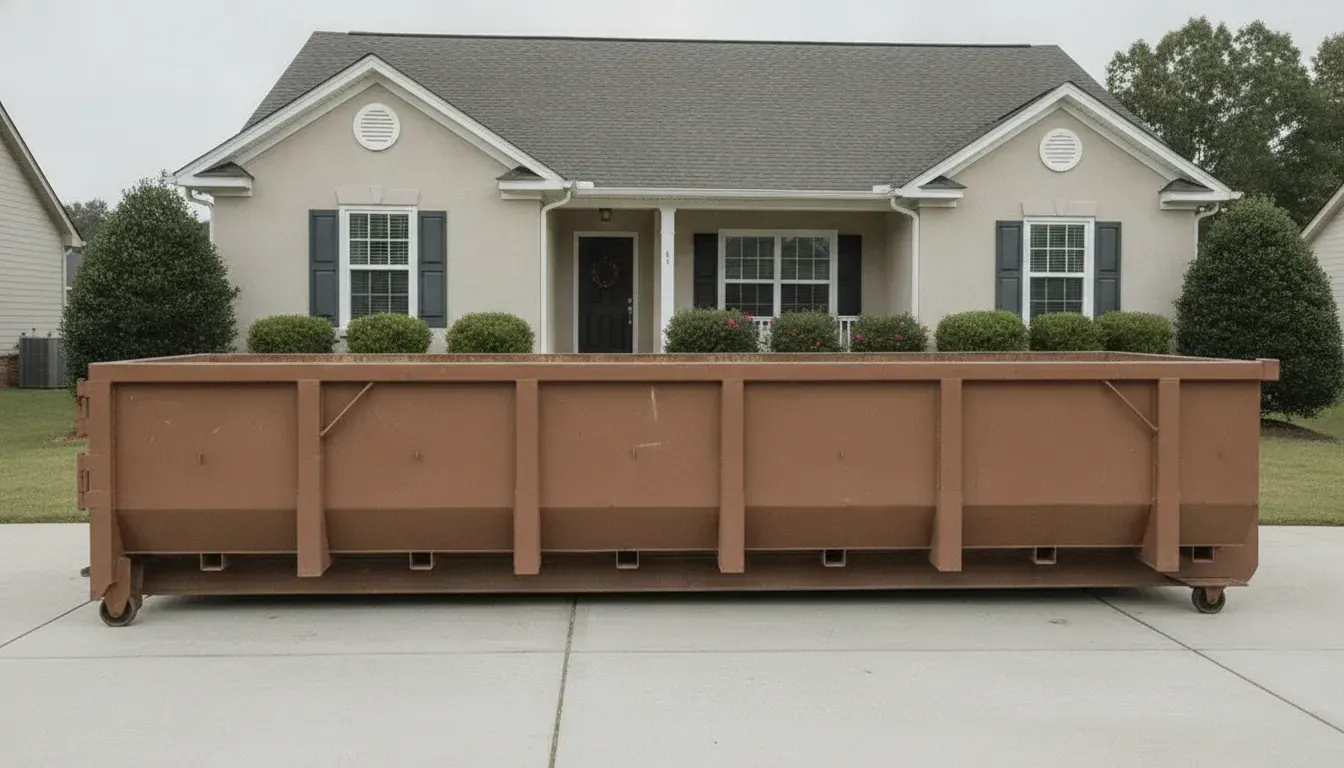
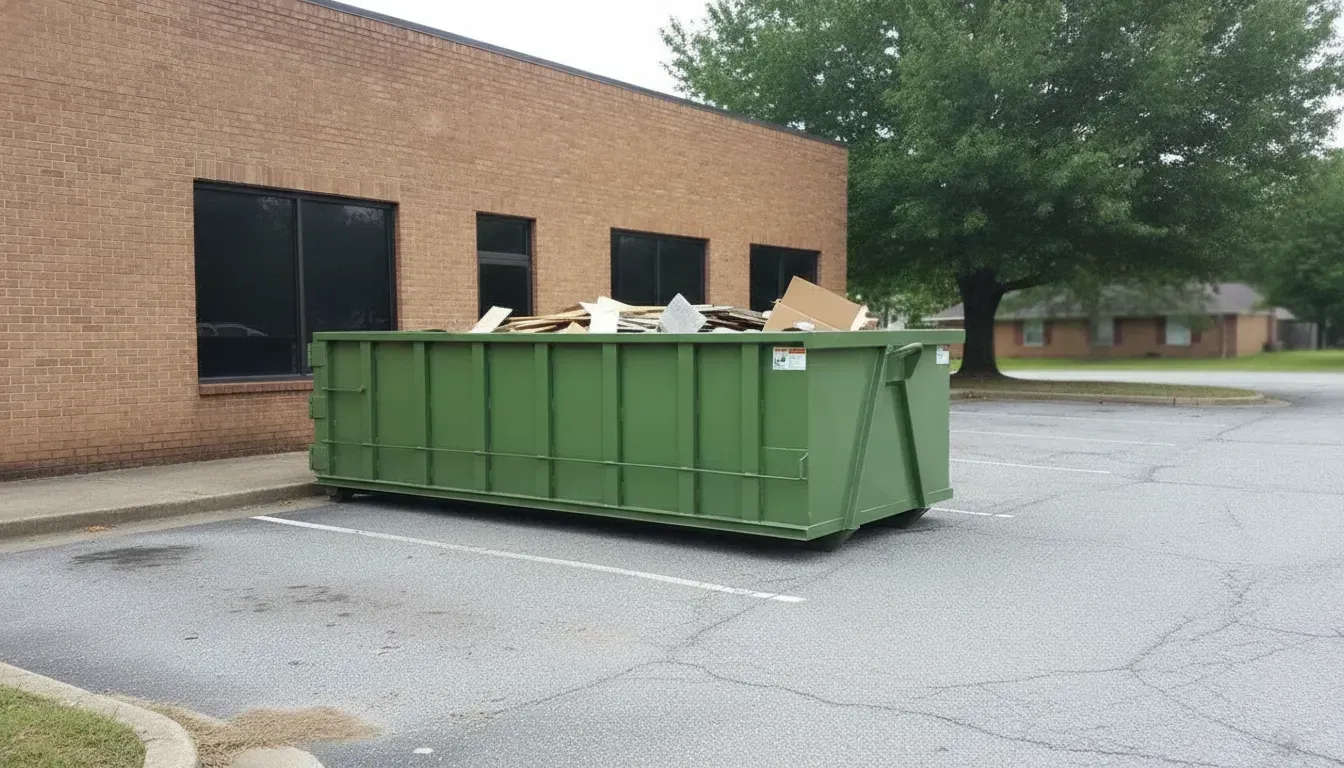
The documented rental is a 15-yard roll-off. Its listed dimensions are approximately 5 feet high, 14 feet long, and 7.5 feet wide. Treat these measurements as a planning reference, not a substitute for checking the actual site. Measure the proposed spot and consider the room needed for the truck to approach, place the container, and later retrieve it.
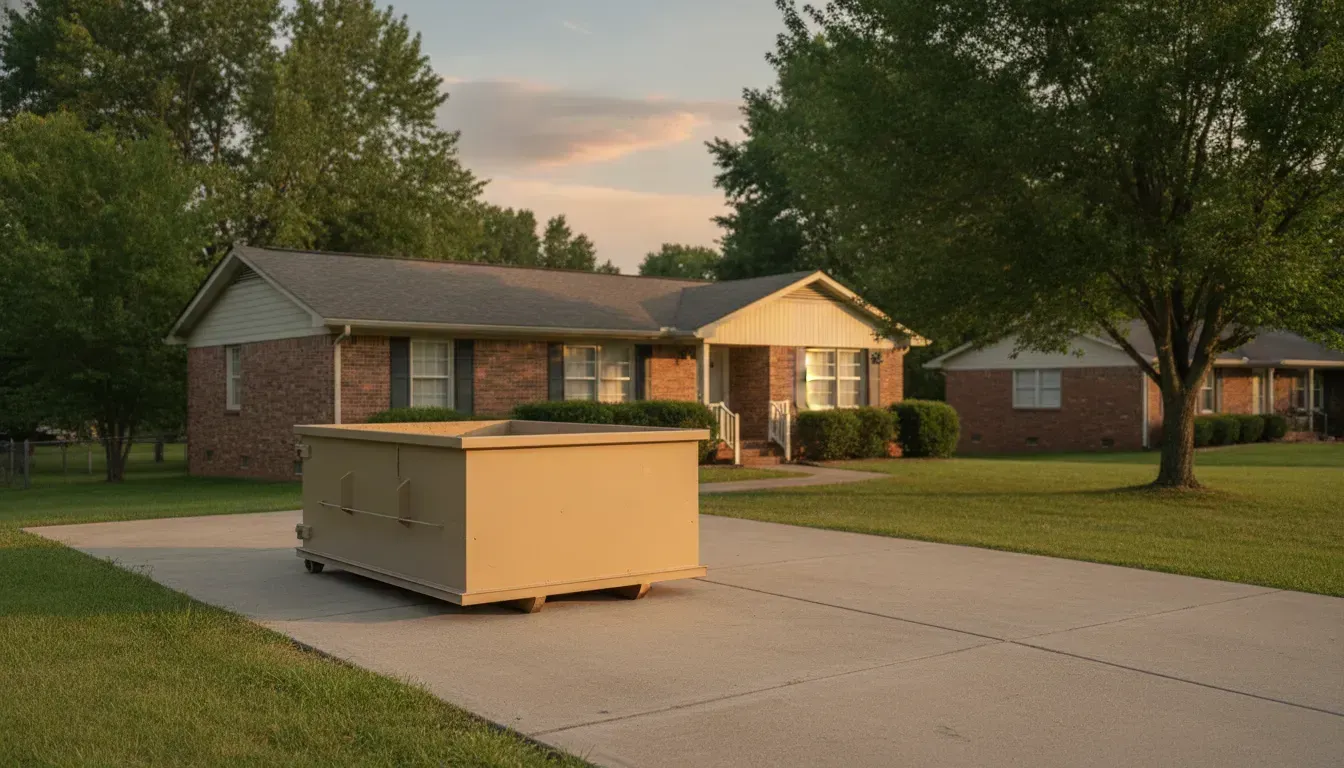
The company describes the bin as driveway-oriented and suitable for residential projects such as renovations, landscaping, moves, and smaller deck work. Capacity in practice depends on what is being discarded, the shape of the items, and how they are loaded. A light, bulky pile occupies space differently from compact, dense debris. Do not judge fit by the yardage label alone: explain the project type, material, and approximate volume when you ask whether the rental is appropriate.
For an initial scope check, list the rooms or outdoor areas involved, the main material categories, and whether demolition is part of the work. Then identify unusually bulky objects or heavy materials separately. This simple description helps the provider respond to the actual job rather than a vague label such as “cleanup.” It also gives you a chance to learn about restrictions before the container is on site.
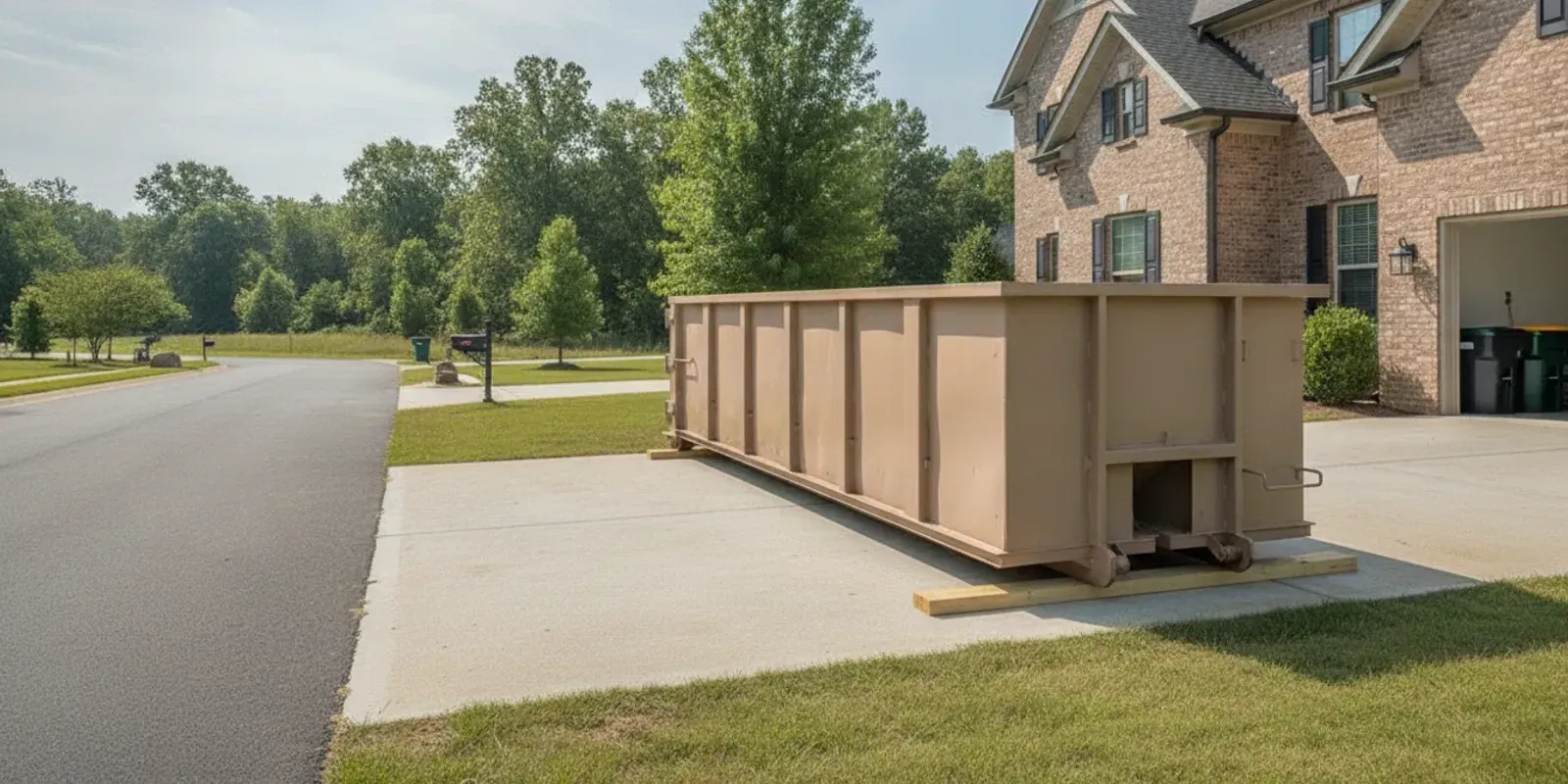
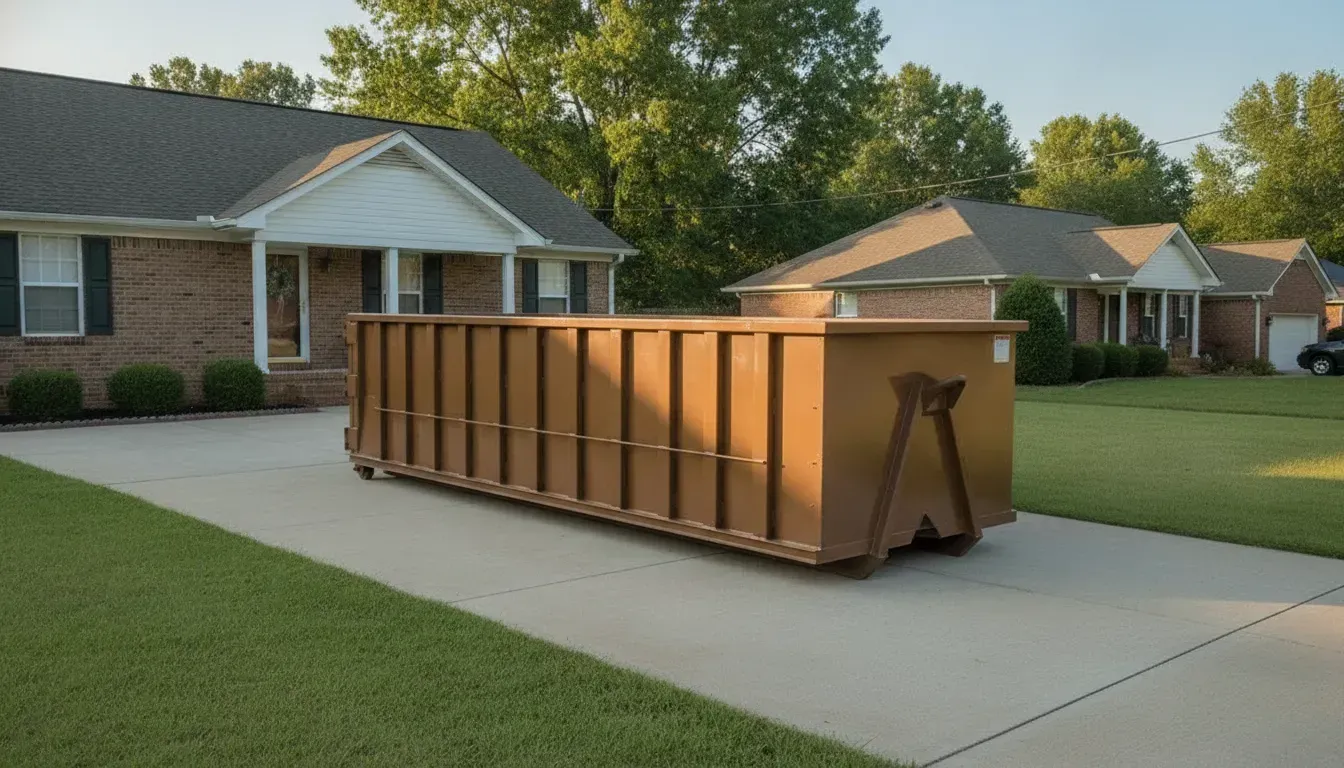
Read the company’s driveway-safe placement information when evaluating a driveway location. The company says protective planks are used when needed. That is a placement practice, not a promise that every surface is risk-free; disclose delicate paving, cracks, steep slopes, soft ground, tight access, and overhead obstructions before delivery.
How can you prepare a driveway before delivery?
A few site checks can make the placement conversation clearer. Walk the route from the street to the proposed position and imagine the full delivery process, not only the final footprint. The listed container dimensions describe the bin itself; the truck needs a usable approach and room to maneuver as well.
- Measure the proposed space. Check whether a roughly 14-foot-long by 7.5-foot-wide container fits where you intend to place it. Note nearby walls, parked vehicles, gates, and landscaping that could limit access.
- Clear the approach. Move cars, portable bins, tools, and other removable obstacles from the path and intended placement area before the agreed delivery window.
- Look above the route. Tree limbs, wires, roof edges, and other overhead objects can matter during delivery. Point them out when discussing the site.
- Inspect the surface. Note cracks, a pronounced slope, soft ground, decorative pavers, or other conditions that may affect placement. Share concerns rather than expecting a driver to discover them on arrival.
- Choose a useful loading point. Keep the bin accessible to the work area, but avoid blocking a garage, walkway, or necessary vehicle access if another workable location exists.
- Describe unusual access. Mention a narrow entrance, sharp turn, low branch, or other constraint. If a spot is hard to explain by phone, ask whether a photo would help the team assess it.
For example, a driveway may appear long enough when empty but become difficult to use if a family car must remain there. Measure the container footprint, decide whether the car can be moved for the rental period, and tell the provider what access must stay open. In another case, a level paved area may have a low tree limb across the truck route. Identifying that obstacle early gives you time to discuss a different placement, if one is available.
Homeowners in an HOA-governed neighborhood should check community rules before arranging delivery. Ask whether temporary containers have placement or duration restrictions, and whether the association expects advance notice. Also consider local requirements that may apply to your specific situation. A tidy plan helps keep a project organized, but it does not replace checking the rules that govern your property.
How should you choose a rental period?
Published rates for the 15-yard rental are $349 for one day, $375 for three days, and $399 for seven days, with no delivery fee stated. These are the published prices, not a guarantee about every project condition or an explanation of every possible charge. Ask how the listed rate applies to your requested dates, what it includes, and what happens if work runs past the planned period.
Estimate duration from the actual sequence of work rather than the fastest possible version. For a move, consider when sorting will be done and how much time you need to carry items to the container. For a yard cleanup, account for the number of planned work sessions and the possibility that weather may shift them. For renovation, allow for separate demolition and cleanup stages if they will happen on different days.
A useful planning exercise is to write down the workdays and loading days separately. If a contractor or helper is only available on certain dates, include those limits in your schedule. Then compare the expected loading window with the available one-, three-, and seven-day options and ask which rental period matches your dates. Do not assume that a particular rate automatically includes an extension or a specific pickup arrangement; confirm those terms before booking.
If the project is uncertain, ask how to request more time before the agreed period ends. Knowing the process in advance is better than waiting until the container is nearly full or the scheduled pickup is imminent. Keep the confirmation details accessible so anyone coordinating the project knows the planned dates and whom to contact with a change.
How can you plan loading without creating problems?
Before work begins, decide who is responsible for loading and how the work area will stay clear. Since the rental is customer-loaded, the homeowner, household members, or project team must bring eligible material to the container. That distinction matters when comparing a dumpster rental with a service in which a crew carries items away for you.
Keep loading orderly. The company FAQ advises distributing material evenly. Place items deliberately instead of leaving a single high pile at one end, and follow the provider’s directions about fill level and safe transport. Never assume that material extending above the rim is acceptable. If a bulky object makes even loading difficult, contact the provider for guidance before pickup.
Make a staging area for debris near the work site, but keep walkways and access routes clear. On a renovation, separate ordinary packaging from items whose acceptance needs confirmation. In a move, sort unwanted belongings before the loading day so you are not making last-minute decisions at the bin. During yard work, gather material in a manageable place and confirm that the specific yard debris is allowed. Ask about any material you cannot confidently classify.
It can also help to assign one person to monitor what goes into the container. That person can refer to the accepted-material guidance, keep the load reasonably balanced, and prevent household members or tradespeople from adding items that were not discussed. This is especially useful when several people are working at once or when the project lasts multiple days.
What details should you confirm before requesting service?
A clear request gives the company the information it needs to discuss fit, access, and timing. Prepare these details before you call or submit the form:
- Your La Vergne service address and preferred delivery date.
- The project type and the areas being cleared or renovated.
- A plain-language list of the material you expect to load, including any heavy or unusual items.
- Your preferred rental duration and likely pickup timing.
- The proposed placement location, available space, driveway surface, and access limitations.
- Any HOA or property rules that could affect placement or the period the container may remain.
Ask the company to confirm that your exact address is serviceable and that your dates are open. Confirm the accepted material, the placement plan, how rental timing is counted, and how to request a change to the schedule. If a driveway has special features, describe them instead of relying on the phrase “driveway-safe” to communicate every detail.
The service request page says a representative generally responds by the next business day. The company also advertises same-day service options and same-day estimates, but availability and timing should be confirmed rather than assumed. You can send a service request with the project details or call (615) 318-5102 to discuss an urgent schedule.
How do the published rates fit a project plan?
| Published rental period | Published rate | Planning question |
|---|---|---|
| 1 day | $349 | Can the eligible debris be gathered and loaded in one day? |
| 3 days | $375 | Do you need time for several work sessions or a staged move? |
| 7 days | $399 | Will the project span multiple days or depend on a flexible work schedule? |
These are the company’s published rates, and the site states there is no delivery fee. Do not infer from that statement that every other possible project condition is covered. Ask what the quoted price includes, whether your dates affect availability, how pickup is arranged, and how extra time or material questions are handled. A direct confirmation is particularly useful when your project schedule is changing or when the debris differs from ordinary household renovation waste.
What changes between a renovation, a move, and yard cleanup?
The container and delivery planning remain similar, but each project creates different questions. A homeowner can make the request more precise by identifying what will be loaded, who will load it, and when work will take place.
Renovation or remodeling
For a bathroom or kitchen project, list the expected categories of removed material and ask about each category before demolition begins. Renovations often proceed in stages: removal, construction, then packaging and cleanup. Decide whether the bin will be used throughout or mainly during a particular phase. If tradespeople will load it, make sure they know the accepted-material guidance and planned rental dates. Do not treat a general example of a renovation as confirmation that every fixture, building material, or heavy item is accepted.
Moving in or out
A move can generate debris in waves as closets, storage areas, and rooms are sorted. Set aside items for donation or reuse separately from items intended for disposal, then estimate the remaining volume. Consider whether the container can be reached without interfering with movers, household vehicles, or the path into the home. If the move date changes, contact the provider about the rental schedule instead of assuming the original pickup plan will shift automatically.
Landscaping or yard work
For outdoor cleanup, estimate how much material will be produced and identify what it consists of. Branches and bulky yard debris can occupy space differently from compact material, so an approximate pile size may not tell the whole story. Tell the provider what you plan to place in the bin and ask about any restrictions. Choose a location that supports loading while avoiding soft or recently worked ground if another suitable spot is available.
What is a practical timeline for arranging a rental?
A short timeline can prevent avoidable uncertainty, even when the cleanup itself is small. The exact lead time depends on availability, so contact the company to confirm rather than relying on a standard delivery promise.
- Scope the project. Identify the work area, likely materials, who will load, and the rough amount of debris.
- Check the site. Measure the proposed space, inspect the route and overhead clearance, and note surface or access concerns.
- Choose a tentative window. Map the project’s workdays and decide which published rental duration seems most suitable.
- Request confirmation. Give the address, dates, material description, and site details. Ask about availability, acceptable materials, price terms, and pickup.
- Prepare the placement area. Clear the route and make sure any community or property requirements have been addressed.
- Load with a plan. Follow the provider’s directions, distribute material evenly, and ask before adding anything uncertain.
- Review the end date. Confirm pickup expectations and contact the provider promptly if the project schedule changes.
For example, a homeowner planning a three-day bathroom refresh might first identify the demolition day, the day materials will be carried out, and the final cleanup. They can then ask whether the three-day option suits that schedule, explain the materials involved, and describe the driveway approach. That sequence does not guarantee a specific delivery or acceptance decision; it ensures the important questions are raised before the work starts.
Frequently asked questions about dumpster rental in La Vergne
Does Rapid Removal Dumpster serve La Vergne?
The company identifies Rutherford County and nearby areas as its service footprint, and La Vergne is a target community. Confirm your exact address and requested dates directly before planning around delivery.
What size dumpster is available?
The documented rental is a 15-yard roll-off, with listed dimensions of about 5 feet high, 14 feet long, and 7.5 feet wide. Describe your project and debris so the company can discuss whether it is suitable.
Can the dumpster be placed on a residential driveway?
The service is driveway-oriented, and the company says protective planks are used when needed. Placement depends on the site, access, and surface conditions. Point out slopes, delicate paving, tight turns, and overhead obstacles; no placement method should be treated as a guarantee against all surface damage.
How much does a rental cost?
The published 15-yard rates are $349 for one day, $375 for three days, and $399 for seven days, with no delivery fee stated. Confirm the price and terms that apply to your dates and project directly with the company.
How do I request a dumpster?
Use the online service request form or call (615) 318-5102. Include your address, preferred dates, project type, materials, and any driveway access concerns.
Request service for your La Vergne project
With your project scope, driveway details, materials, and preferred dates ready, you can ask focused questions and plan a more orderly cleanup from delivery through pickup.