Dumpster Rental in Eagleville, TN: What Homeowners Should Know
Planning a remodel, move, or cleanup in Eagleville? Learn how to size, place, and schedule a 15-yard dumpster rental before requesting service.

If you are planning a remodel, move, or property cleanup, a dumpster rental eagleville tn can give you one place to put debris as the work progresses. Rapid Removal Dumpster offers a customer-loaded 15-yard roll-off rental, and its published service area includes Rutherford County and surrounding areas. Because Eagleville is a target market rather than a confirmed delivery boundary, check your address and project date before planning around a drop-off.
What projects can a 15-yard rental help with?
A temporary dumpster can be useful when debris will build up over several days and you want to load it as you work. The 15-yard container is the documented rental option. It is intended for customer loading, so plan to move and place the material yourself rather than expect a crew to remove items from rooms or haul them away for you.
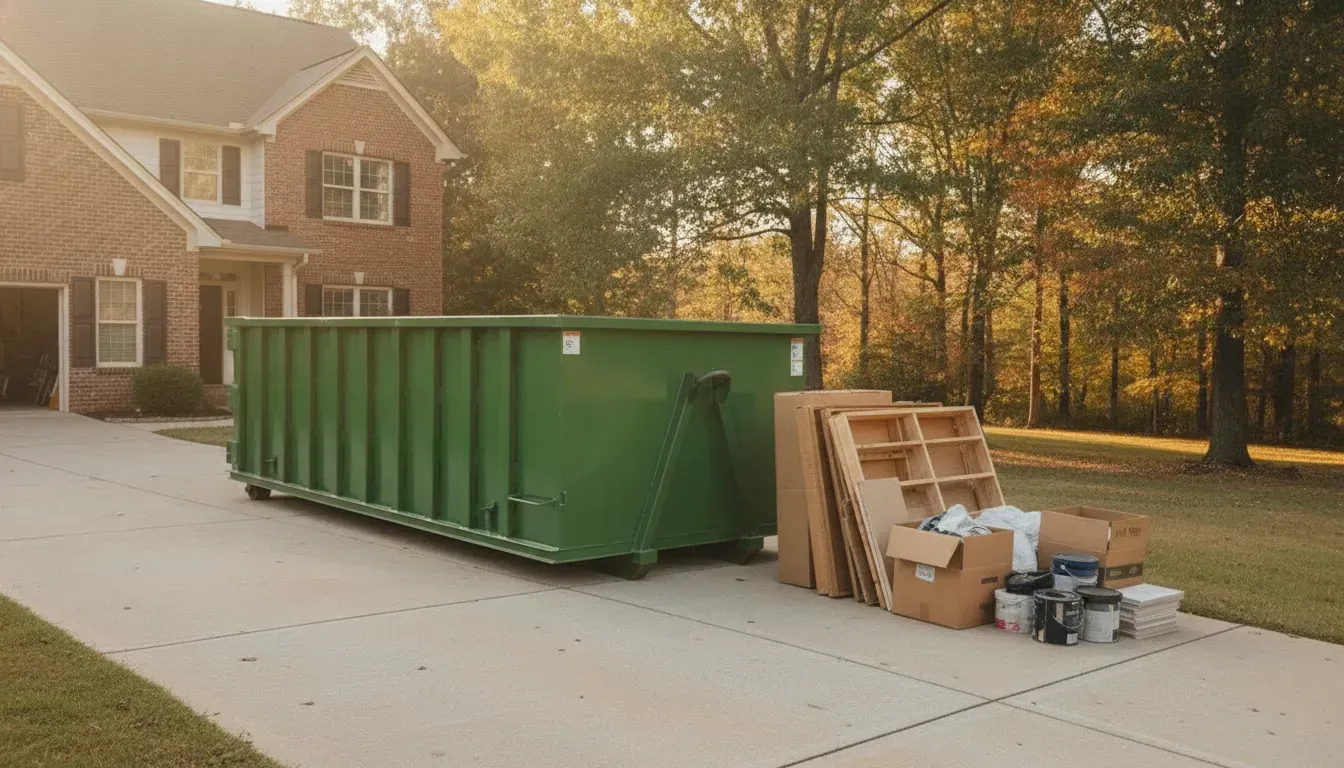
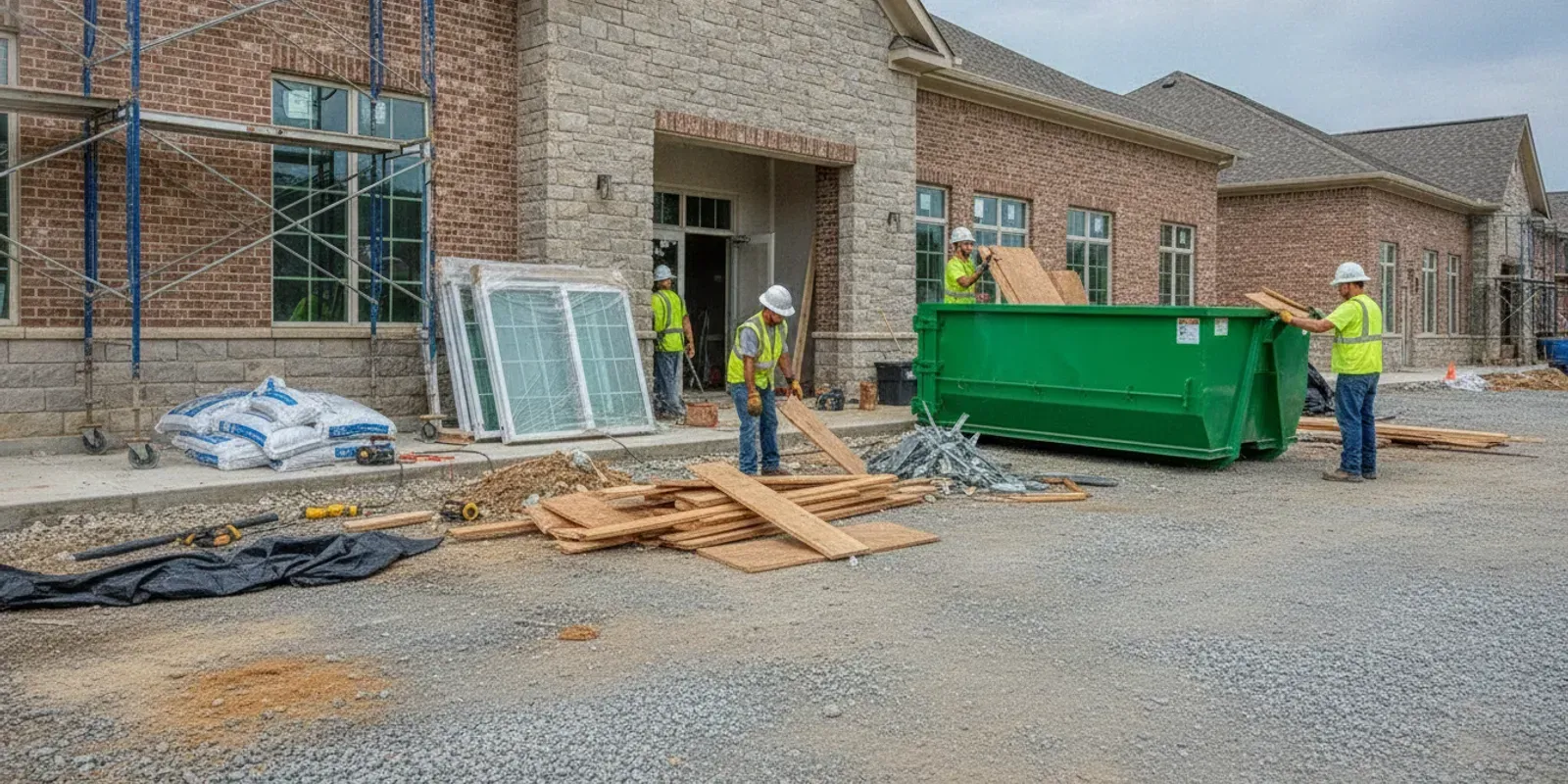
Common project types include remodeling, moving cleanouts, garage and attic sorting, yard work, and smaller construction or outdoor jobs. For each project, start by identifying what is actually going into the container. A bathroom remodel may include old fixtures and flooring; a move may include bulky furniture and boxes; yard work may produce branches and other landscape material. Confirm acceptance before loading any material that is unusual, dense, or potentially subject to special handling.
A rental is less useful when you have only a few items, need someone else to do the lifting, or cannot identify an acceptable place for a container. The service is a container delivery and removal arrangement, not a promise of labor to clear rooms. For a general overview of the service, see the roll-off dumpster rental guide and dumpster size overview.
How do you decide whether the 15-yard size fits?
Volume is easier to estimate when you break the project into material groups. Bulky light items can take up space before they weigh much. Dense material can reach a weight condition sooner even if the pile does not look large. Public information does not state an included tonnage, so ask about weight and material terms instead of assuming that volume alone describes capacity.
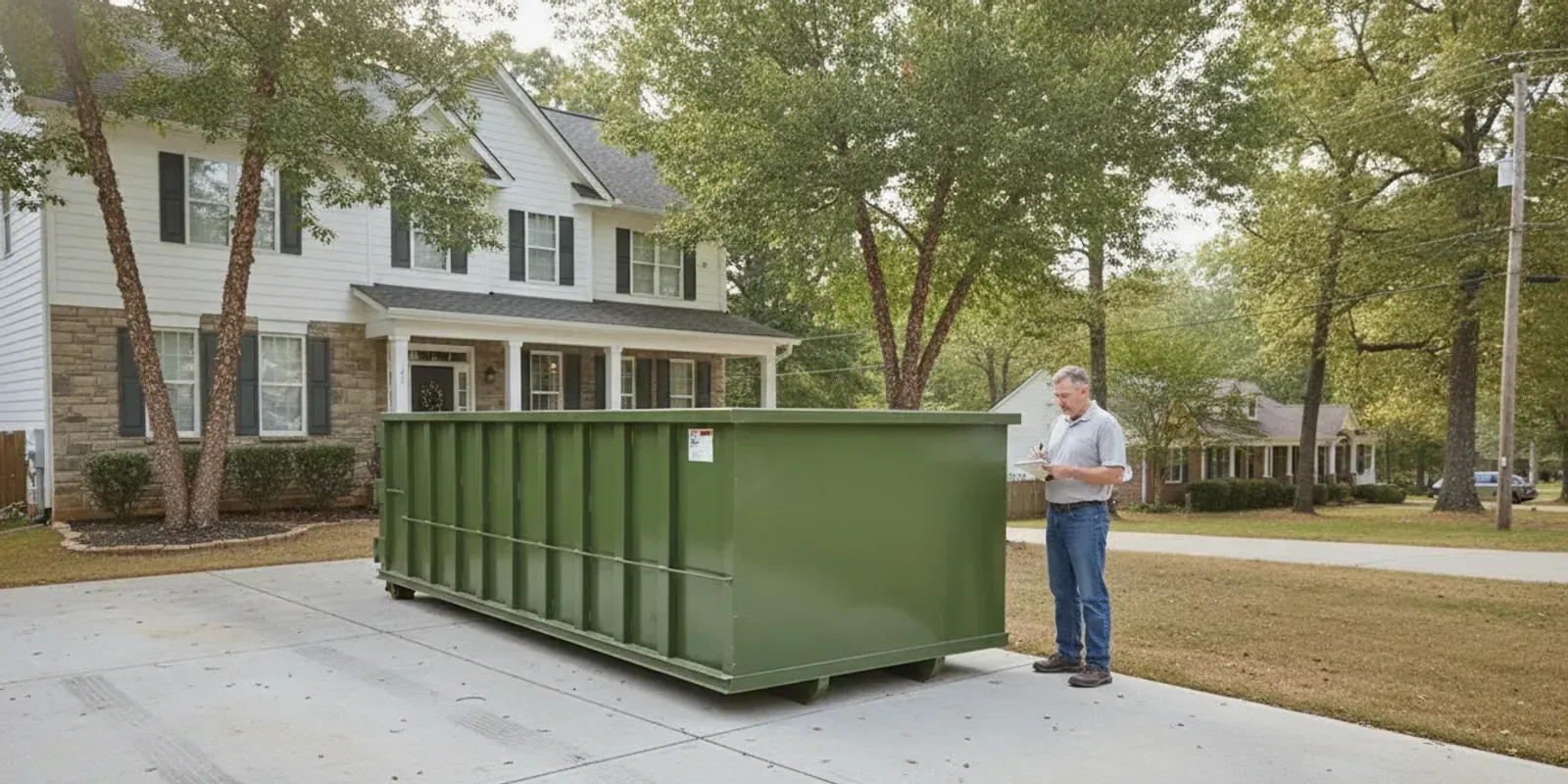
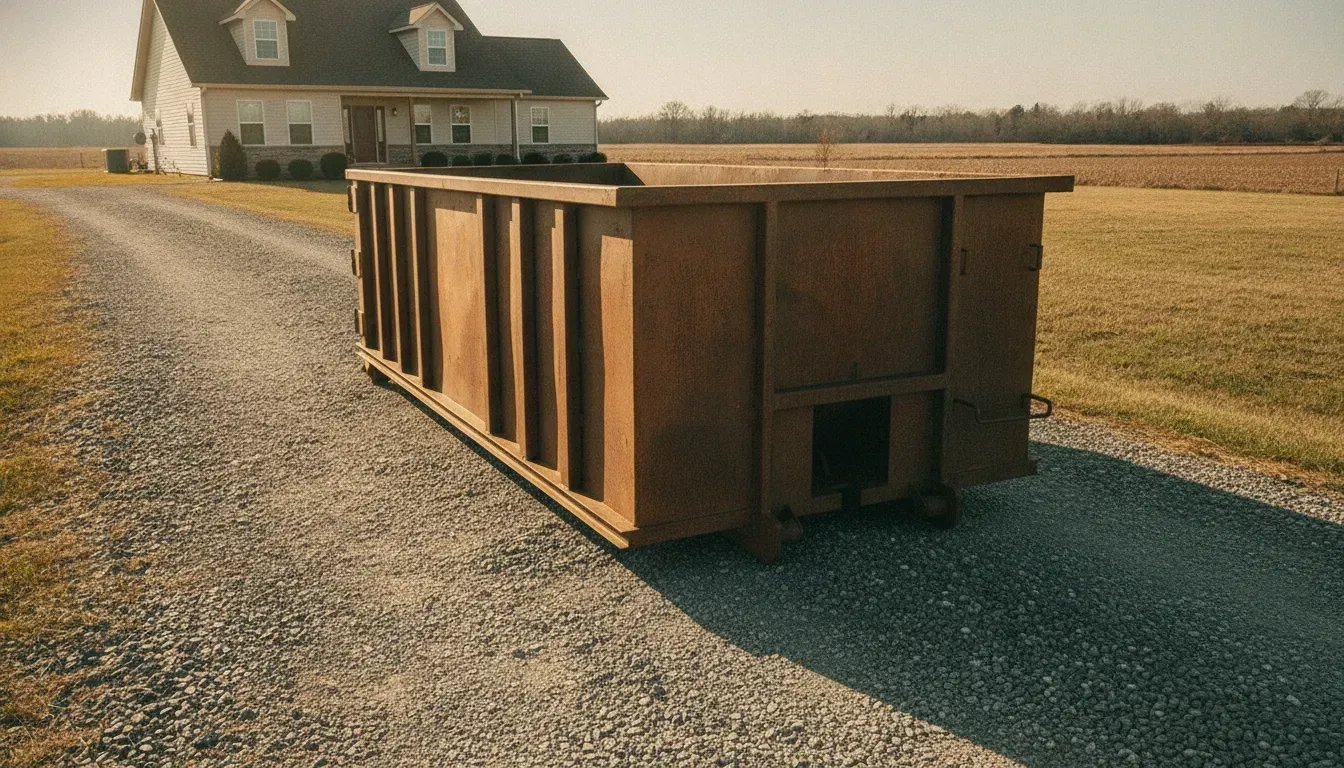
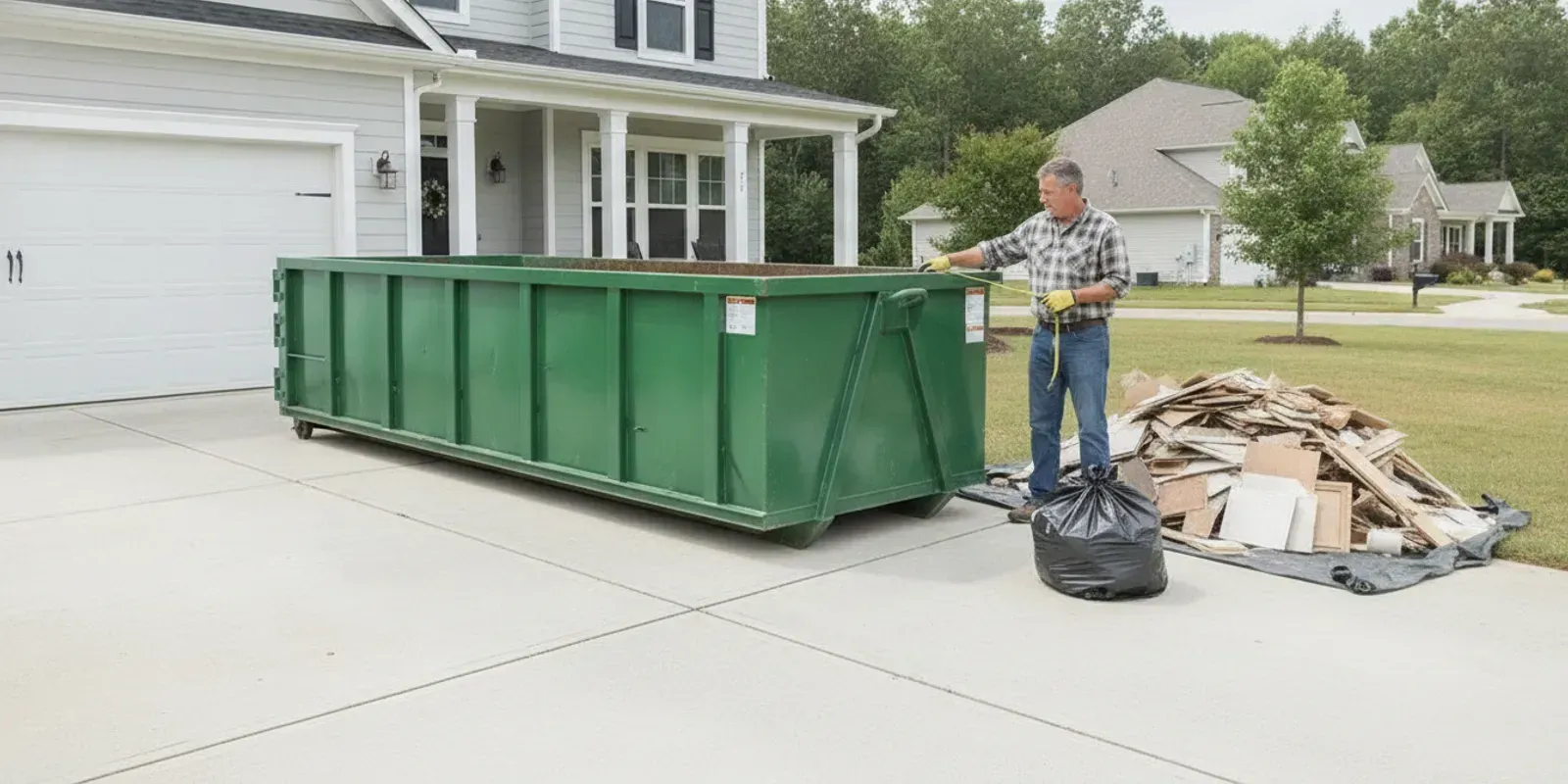
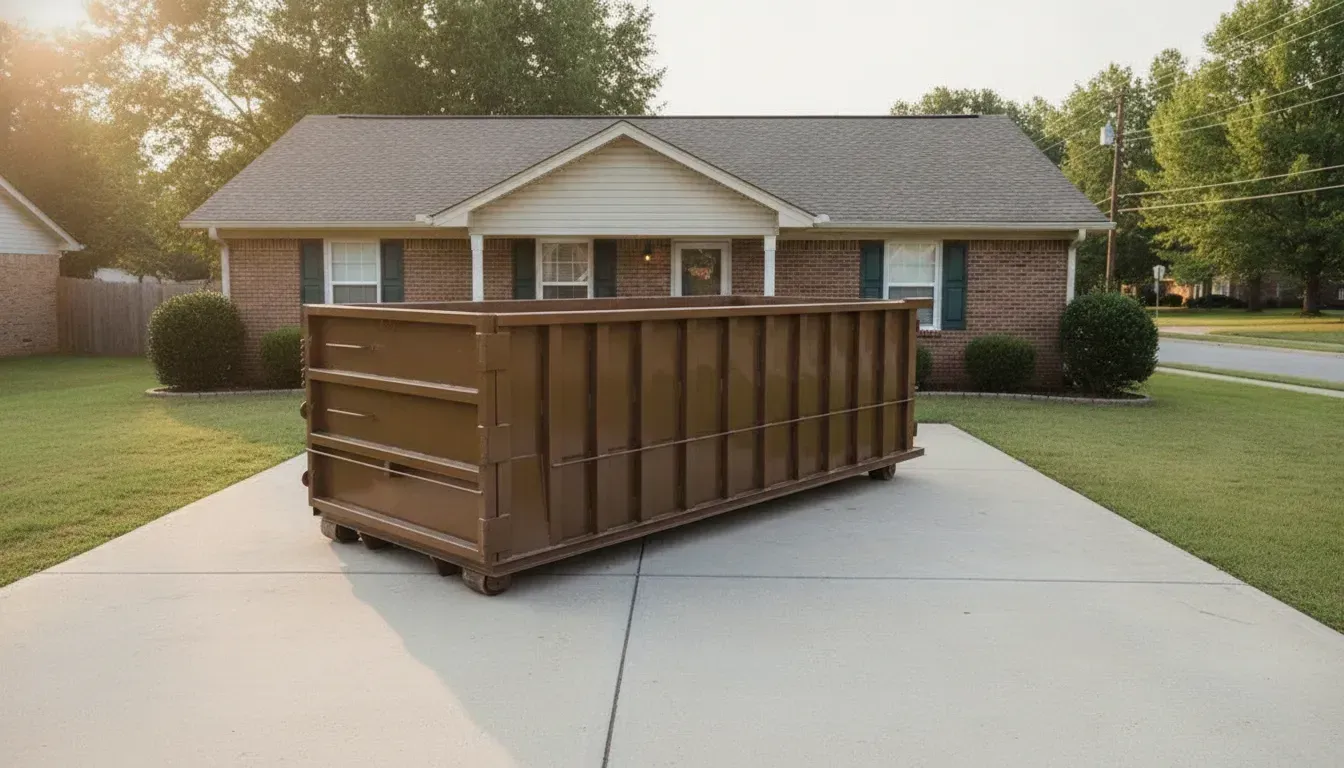
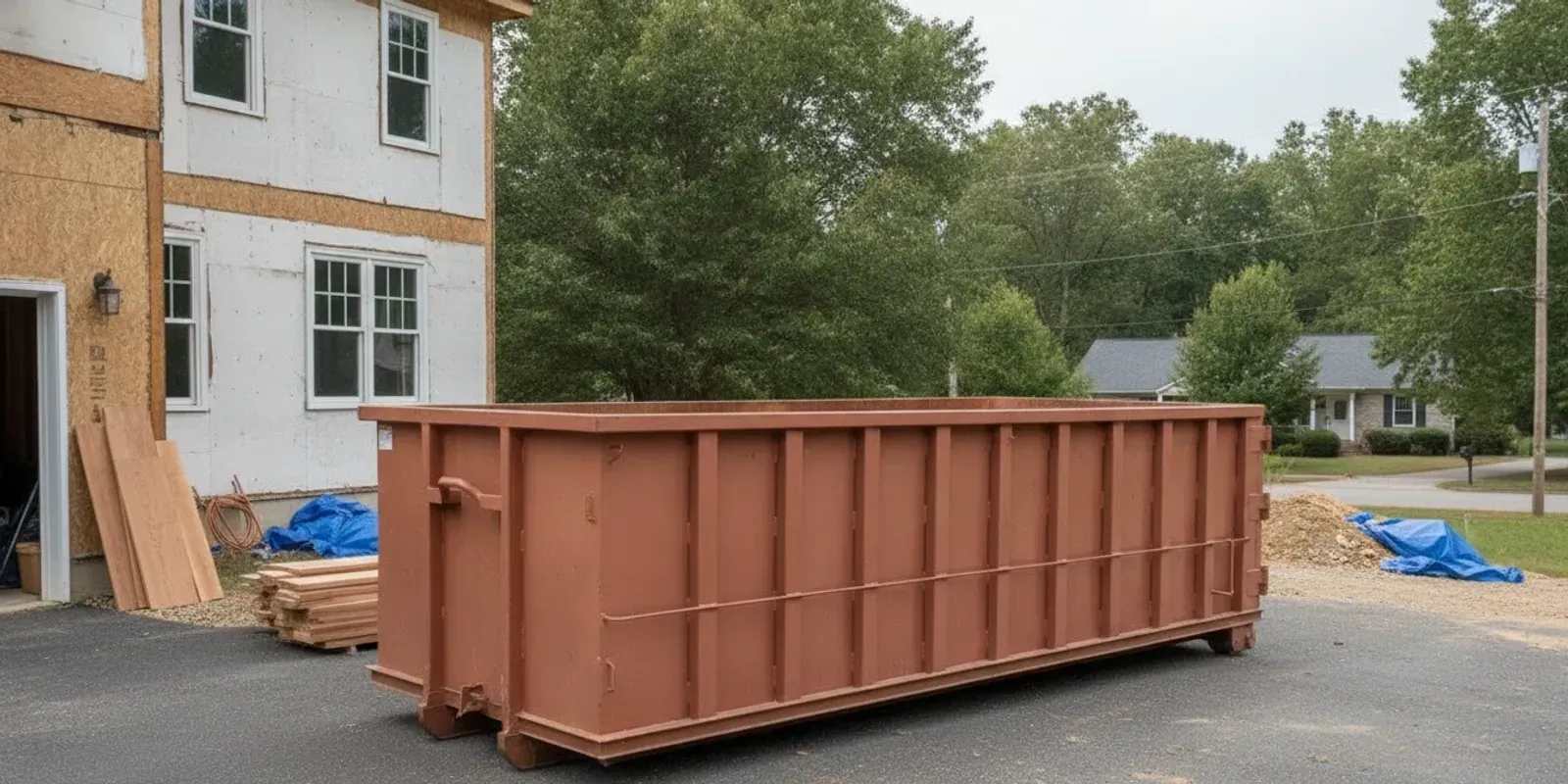
The listed container dimensions are about 5 feet high, 14 feet long, and 7.5 feet wide. Compare those dimensions with both the proposed placement area and the scale of the debris. The company describes capacity as an operator estimate of about seven truckloads, but that is a rough reference, not a guarantee that every household's debris will fit. Material shape, packing, and project mix all matter.
- List the work areas. Note each room, structure, or outdoor area that will be cleared. Include only the work that is part of this project, not every item you might eventually discard.
- Identify the debris. Separate bulky household pieces, renovation debris, yard material, and items requiring a policy check.
- Estimate the pile. Count major pieces and describe approximate quantities. “One bathroom” does not reveal whether fixtures, wall materials, cabinetry, and flooring are all being removed.
- Flag heavy items early. Tell the company what they are and ask whether they are accepted and what weight-related terms apply.
- Allow for irregular shapes. Long boards, awkward furniture, and mixed pieces may leave air gaps that make a pile occupy more room than a neat stack.
For example, a homeowner removing a vanity, flooring, and a few cabinets should describe those items rather than simply say “bathroom renovation.” Someone clearing a garage should mention whether it is mostly boxes or includes bulky furniture. If the estimate is uncertain, ask whether the documented 15-yard rental sounds appropriate. The rental FAQ can help with general questions, while project-specific materials and capacity should be confirmed directly.
What should you compare before requesting a rental?
Container volume is only one part of the decision. Duration, placement, work sequence, and material mix affect whether the plan is practical. The table organizes questions to answer; it does not add terms that have not been published.
Planning item: Project volume. What to check: How many rooms or areas, and what kinds of debris? Why it matters: Helps assess whether a 15-yard container may fit the job.
Planning item: Rental period. What to check: One, three, or seven days. Why it matters: Choose a window that gives you time to load without rushing.
Planning item: Placement. What to check: Driveway dimensions, slope, overhead clearance, and access. Why it matters: The truck needs a suitable approach and drop location.
Planning item: Materials and weight. What to check: Confirm acceptance and ask about weight terms. Why it matters: Public details do not establish a universal policy or tonnage.
Planning item: Address and date. What to check: Confirm the exact Eagleville address and requested day. Why it matters: A target area is not a guarantee of coverage or availability.
How can you prepare a driveway for delivery?
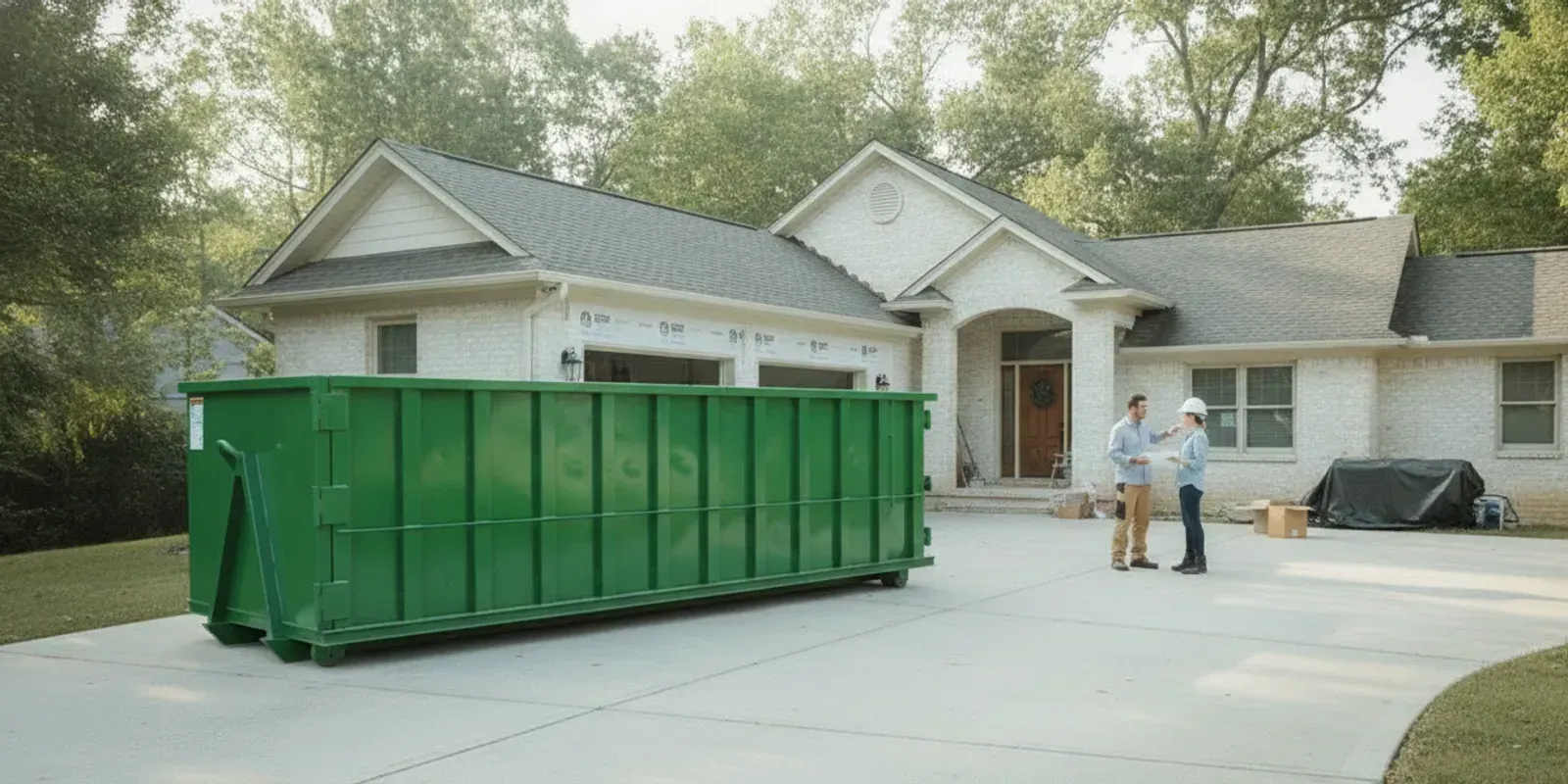
Rapid Removal Dumpster presents its rental as driveway-oriented and describes placement practices that may include protective planks when needed. This is a placement practice to discuss, not a promise that a driveway or other surface cannot be marked or damaged. Surface condition, access, and the chosen location deserve attention before delivery.
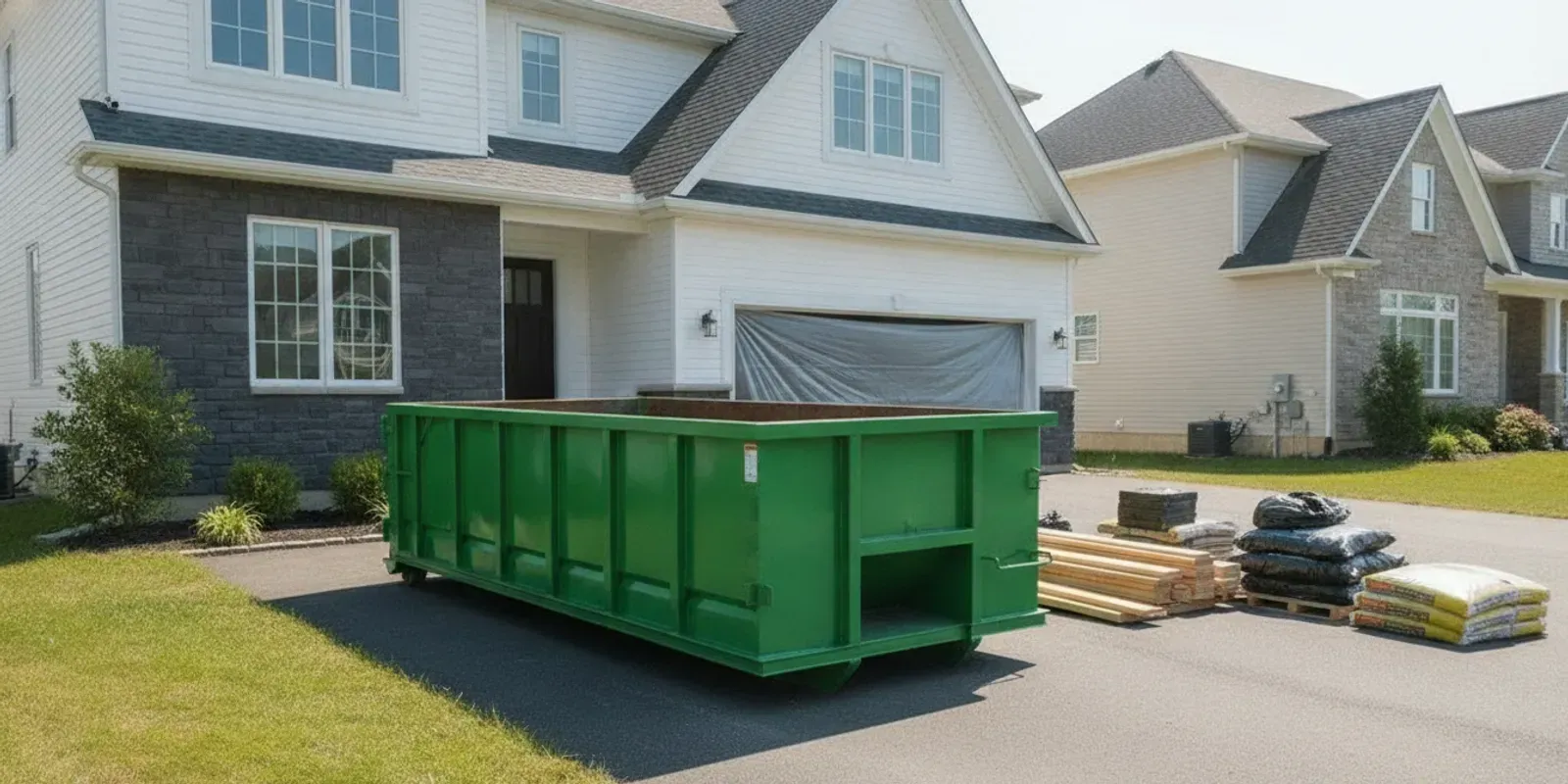
Walk the driveway with the container dimensions in mind. Identify a level, accessible spot that will not block doors, garage access, or the portion of the drive you need during the project. Look for low branches, wires, gates, parked vehicles, and the path a delivery truck would need. If the best spot is not obvious, describe the site when requesting service and ask how placement can be assessed.
- Move vehicles and movable obstacles out of the proposed delivery path.
- Tell the company about a narrow approach, slope, soft ground, or other access concern.
- Ask whether protective planks are appropriate for the specific placement.
- Check local or neighborhood expectations before reserving space, especially if the container could affect shared or public areas.
- Keep the final placement area clear for loading and avoid putting items where they could obstruct access.
A clean, presentable container and sensible placement can help a project feel less disruptive to neighbors. If your neighborhood has an HOA, review its rules and timing requirements first. Do not assume an association or local authority will approve placement automatically. The company's driveway placement guide offers more context; understand its placement language as a process to discuss for your site, not a surface-damage warranty.
How long should you keep the container?
Rapid Removal publishes three 15-yard rental durations: one day, three days, and seven days. A focused job may fit one day if materials are ready and loading can happen promptly. A renovation that unfolds across multiple work sessions may need a longer window. A move or broad cleanup can also take longer if sorting happens as you go.
Before choosing a duration, make a work plan. Identify when debris will be ready, who will load it, and which tasks must happen before pickup. A calendar can reveal dependencies: perhaps cabinets cannot be removed until a room is cleared, or yard work must wait for weather. If you need extra time, ask about options and terms before the rental begins; do not assume extensions are included.
Published rental period: One day. Published price: $349. Possible planning use: A focused job with debris ready to load in a short window.
Published rental period: Three days. Published price: $375. Possible planning use: A project spread over several work sessions.
Published rental period: Seven days. Published price: $399. Possible planning use: A longer cleanup or renovation schedule.
The site also states there is no delivery fee. These are published prices, not a complete statement of every possible project condition. Confirm the total and what the chosen rental includes for your address, materials, and dates. See the dumpster cost guide for more context.
What should you ask about materials and loading?
Do not treat a general project example as permission to put every material in the container. Accepted materials and weight conditions can vary, and published information does not give a complete universal list or included-tonnage figure. Ask about the actual items before delivery, especially if your project includes dense material or anything that might require special handling.
When you contact the company, give a plain description. Say, “I am removing flooring and cabinets from one kitchen,” or, “I am clearing a garage and have several bulky items.” Include approximate quantities. Clear details make it easier to get a useful answer than asking only whether a dumpster is available.
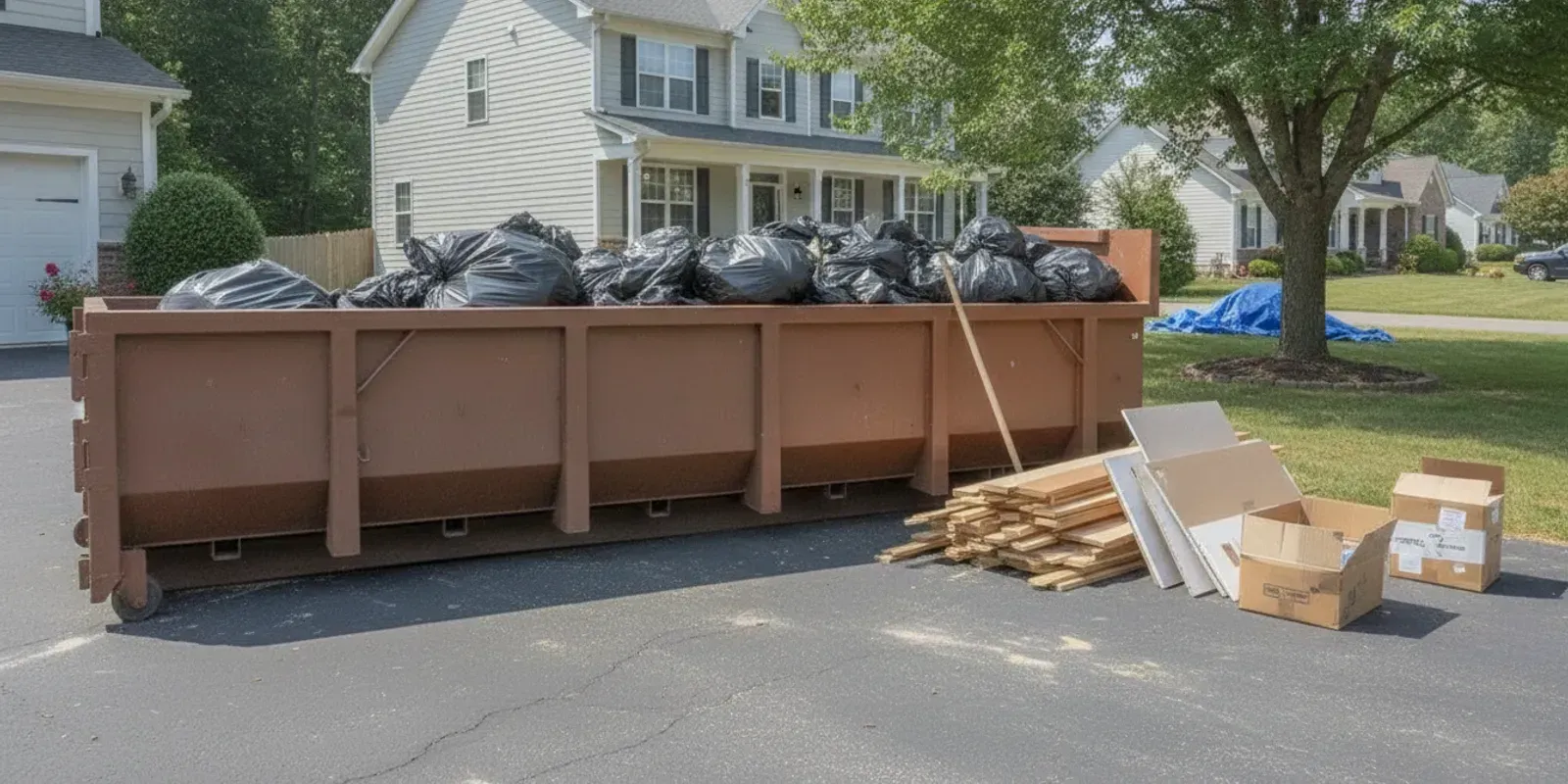
Load evenly and keep material within the container. Avoid piling it above the top edge, and follow the loading instructions you receive. Before loading, stage materials near the container without blocking the truck path or household access. As you fill it, distribute material rather than creating one high mound. Do not climb on the container or assume you can retrieve items once they are buried. Ask how to handle an item you cannot classify.
How can Eagleville homeowners plan delivery?
The company's public service-area description identifies Rutherford County and surrounding areas, while Eagleville is listed as a target market. That does not establish that every Eagleville address is eligible or that a particular date is available. Confirm the exact address, delivery conditions, and schedule directly before committing to a project timeline.
Rapid Removal advertises same-day service options and same-day estimates, but availability is not stated as universal. The request form says a representative generally responds by the next business day. If timing is urgent, call rather than assuming an online request creates an immediate booking. You can review company information before you contact the team.
Have these details ready when you request a rental:
- Your delivery address and preferred date.
- The project type and a short description of expected debris.
- Your preferred rental period: one, three, or seven days.
- Driveway access details, including slope, overhead obstacles, and available placement area.
- Questions about accepted materials, weight terms, pickup, and what the published price includes.
How do you make a rental period more useful?
Prepare before delivery rather than using rental days to decide what to remove. Sort items into keep, donate, recycle, and discard groups where appropriate. Move the discard pile toward the planned loading area while leaving room for safe movement. For a remodel, coordinate debris-producing work so the container is not sitting unused while the project waits on another step.
For a move, decide which rooms and items are included in the cleanout. A simple room-by-room list can prevent the scope from expanding while the rental clock is running. Put aside items that need a separate decision, such as items another household member may want to keep, rather than mixing them into the discard pile. For yard work, keep landscaping material separate until you have confirmed what can be loaded.
For a renovation, sequence work to reduce unnecessary handling. Identify when demolition debris will appear and whether it can be carried directly to the container. Protect clear walking paths between work areas and the drop location. If several people are helping, decide who will carry materials and who will keep the path clear. A planned route can help avoid carrying the same debris twice.
Load deliberately. Distribute heavier pieces across the floor, then use smaller material to fill practical gaps. Do not pack items in a way that makes the load unstable or difficult to manage. Keep pathways clear and follow the company's loading directions. These are project organization steps, not a substitute for confirming accepted materials or limits.
How do project examples change the plan?
Different jobs call for different preparation even when the same container is used. Consider three common Eagleville scenarios, then adapt the checklist to the actual debris and site.
A one-room remodel
Suppose a homeowner is updating a bathroom and expects to remove a vanity, flooring, and several fixtures. First, confirm that each item is accepted and ask about weight terms. Next, measure the placement area and clear the driveway. Then choose a rental period based on when demolition will happen and how many people can load. If the contractor's schedule changes, ask about the rental options before assuming the container can remain longer. Keep packaging and new materials out of the discard plan so the container is used for the debris the project actually produces.
A move-out cleanout
For a move, the largest challenge may be sorting rather than demolition. Walk each room and identify what is staying, going to another home, or being discarded. Estimate bulky items separately from boxes; several large pieces may occupy more space than a stack of compact items. Keep donation or resale items out of the container. If family members are deciding as they go, set a decision deadline before delivery so the rental period is used for loading rather than discussion.
A garage and yard cleanup
A combined cleanup can produce a mixed pile: household discards, bulky objects, and landscape debris. Separate the groups and ask about each type before delivery. Check the route from the garage and yard to the proposed drop location. If the route crosses a narrow gate or uneven ground, plan how items will be carried without blocking access. Avoid assuming that every material from a yard or shed is accepted simply because the job is called a cleanup.
These examples are planning exercises, not capacity guarantees. The best estimate comes from a clear list of materials, quantities, work timing, and placement constraints.
When might a dumpster rental not be the right fit?
A container may not suit a project if the debris is very limited, you cannot load it yourself, or there is no workable drop location. It may also be a poor fit when material type or weight cannot be confirmed. Explain the situation before requesting service and ask what options are appropriate instead of assuming the 15-yard rental will solve it.
Think about the neighborhood setting as well. Driveway placement can be practical, but the container occupies space for the rental period. Check household access, HOA requirements, and relevant local expectations. If your plan depends on a public street or shared area, confirm applicable permissions yourself and discuss placement with the company.
What should you confirm before placing a request?
A short, specific conversation can resolve the key unknowns. Ask whether your exact Eagleville address is serviceable, whether the requested date is available, and which duration matches your plan. Confirm the published price for that period and ask what it includes. Check the accepted-material policy and any weight-related terms for the debris you described.
Then review the drop location together. Share dimensions or a photo if useful, describe access constraints, and ask whether protective planks may be appropriate. Confirm the pickup process and any scheduling details for the end of the rental period. The goal is not to assume extra services or terms; it is to get the details that apply to your request directly from the company.
Use the contact page if you want to review available contact options before submitting details.
Share your project details and request service
With project volume, driveway, materials, and schedule checked in advance, you can decide whether a 15-yard rental is a practical fit for your Eagleville cleanup, move, or remodel.