Dumpster Rental Guide: Sizes, Costs & Delivery
Find out how dumpster rental works, compare sizes and costs, and get tips for smooth delivery and pickup for your next project or cleanup.

Business waste doesn’t always fit neatly into a bin. A tenant turnover, store refurbishment, construction job, or busy event can leave you with more debris than your usual waste service can collect. A dumpster rental can make cleanup more manageable by keeping project waste in one accessible container. But choosing one involves more than picking a size. You’ll need to consider material restrictions, weight limits, rental time, delivery access, and possible extra charges. This guide walks through the key decisions, so you can plan a rental that fits your project, your site, and your budget without avoidable delays.
Key Takeaways
- Choose a dumpster for your project: Estimate debris volume and weight, check container dimensions, and confirm the site has room for delivery and pickup.
- Review costs and rental terms: Get a written quote that explains included services, rental length, weight limits, extra fees, and accepted materials.
- Prepare the site and schedule: Confirm permits and property approval, clear the truck’s route, and coordinate delivery and pickup with your provider.
What Do Businesses Use Dumpster Rentals For?
Businesses rent dumpsters to collect debris from construction, clear out commercial spaces, manage landscaping waste, and handle cleanup after events. The right rental depends on what you’re disposing of, how much waste you expect, and where the container can be placed.
Construction, Renovation, and Demolition Projects
Construction, renovation, and demolition projects can produce bulky debris quickly, including drywall, lumber, flooring, fixtures, and packaging. A roll-off dumpster gives workers one central place to put accepted waste, helping keep the jobsite organized and reducing trips to disposal facilities. Westphal Waste Services describes dumpster rentals as a useful option for homeowners, contractors, and businesses managing project waste.
Before booking, estimate the volume and type of debris the project will generate. Heavy materials such as concrete, brick, and soil may reach a weight limit before filling the container, so confirm the provider’s rules. Share your project details when requesting a quote, and check what the rental includes, such as delivery, pickup, disposal, and the rental period. Planning ahead helps you choose a container that fits the work.
Office Cleanouts, Property Clearances, and Tenant Turnover
Businesses may rent dumpsters to clear out furniture, shelving, displays, packaging, or outdated equipment. This can be useful during an office move, retail rebrand, refurbishment, seasonal cleanup, or tenant turnover. Having a container nearby gives staff and contractors a convenient place to put accepted items as they work, rather than leaving piles in hallways or making repeated disposal trips.
Consider the type of items being removed as well as the amount. Desks and fixtures take up more room than bags of general waste, while electronics, paint, and some appliances may need special handling. J. Johnnie On The Spot notes that roll-off dumpsters can help offices and retail spaces during rebranding and refurbishment. Confirm material rules and delivery access before booking, especially if the property has shared loading areas or limited parking.
Landscaping, Events, and Recurring Waste
Landscaping projects can leave behind branches, brush, sod, soil, and other yard debris. Businesses may also rent a dumpster to clean up after an event, facility refresh, or seasonal maintenance project. For larger jobs, a container provides one place to collect waste as crews work. Westphal Waste Services highlights dumpster rentals as a practical option for managing waste from substantial projects.
Check which materials the provider accepts, since rules for soil, branches, and other organic waste vary. If your business generates waste regularly, ask about ongoing service instead of arranging separate rentals for each cleanup. For a one-time event, schedule delivery and pickup around setup and breakdown. This keeps the container available when it’s needed and helps avoid paying for extra rental time.
Match the Dumpster to Your Debris and Job Site
Choose a dumpster that suits both your waste and your site. A container that’s too small may fill before the job is complete, while an oversized one can mean paying for capacity you don’t use. Ted’s Trash recommends matching the container size to the project to avoid these common issues.When you request a quote, describe the project, the materials you’ll discard, and the amount of waste you expect. Mention dense debris, which can reach the weight limit even when the dumpster isn’t full. Then check the placement area and truck access. The provider needs room to deliver and retrieve the container, and it shouldn’t block entrances or essential routes. Share site details such as narrow driveways, gates, and loading schedules before booking.
What Dumpster Types and Sizes Can You Rent?
Roll-Off Dumpsters for Temporary Projects
Roll-off dumpsters are a practical choice for projects that create a lot of waste over a short period, such as construction, renovation, demolition, and property cleanouts. A truck delivers the container and places it at your site, where your team can load debris as work progresses. When the dumpster is full or the rental period ends, the provider picks it up.
Before booking, confirm that the company accepts the materials you plan to dispose of and that your site has room for delivery. Roll-off containers come in several sizes, so you can choose one suited to your project rather than paying for more capacity than you need. Learn more about roll-off dumpster rentals and their uses.
Front-Load Dumpsters for Ongoing Waste
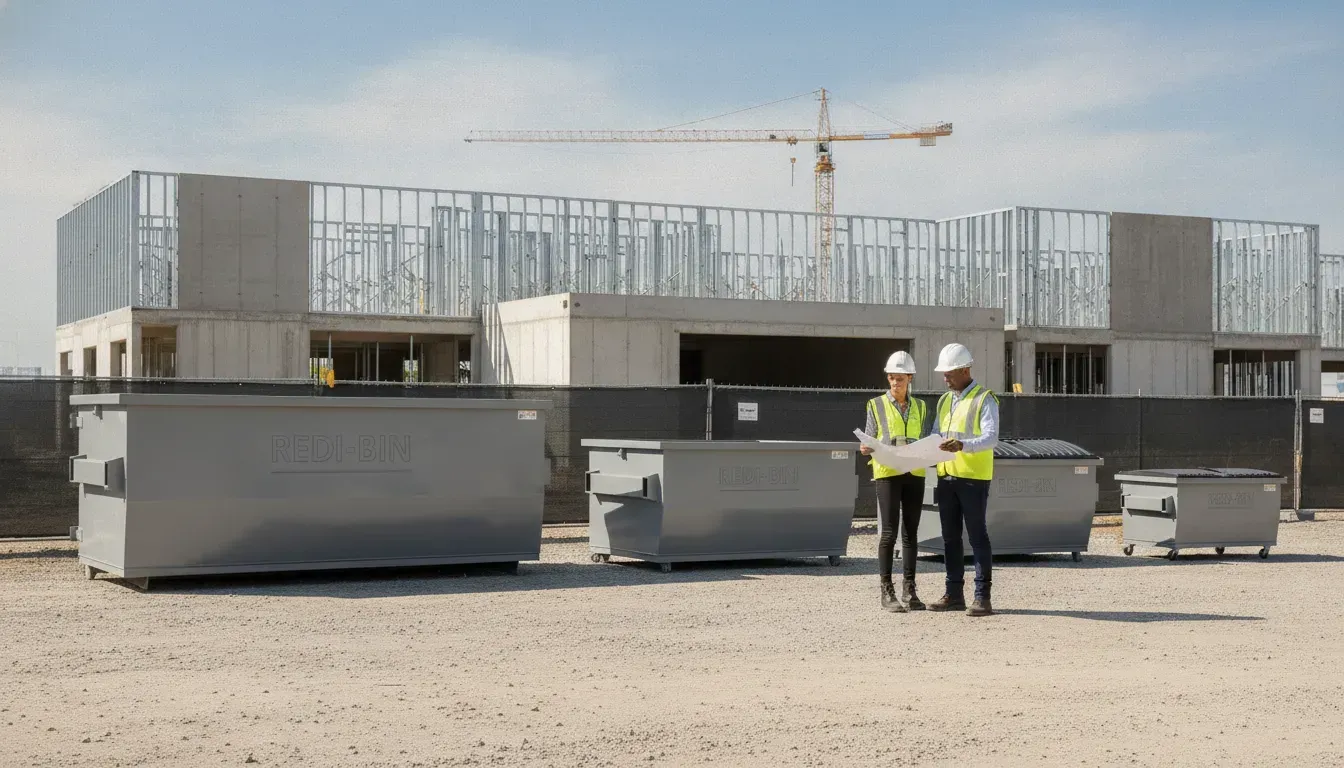
Front-load dumpsters are made for businesses and properties that need regular waste collection. A container stays in a designated spot, and a front-loading truck empties it on a scheduled basis. Restaurants, offices, retail stores, and apartment buildings often use them to manage day-to-day waste.
When comparing service options, estimate how much waste your location produces and how often the container needs to be emptied. Ask providers about pickup frequency, placement requirements, and accepted materials. The right schedule can help prevent overflowing waste while avoiding pickups your business doesn’t need. Unlike a roll-off dumpster for a temporary project, a front-load service is intended to provide ongoing collection. Front-load dumpsters are commonly used for recurring commercial waste needs.
Compare Roll-Off Sizes and Capacities
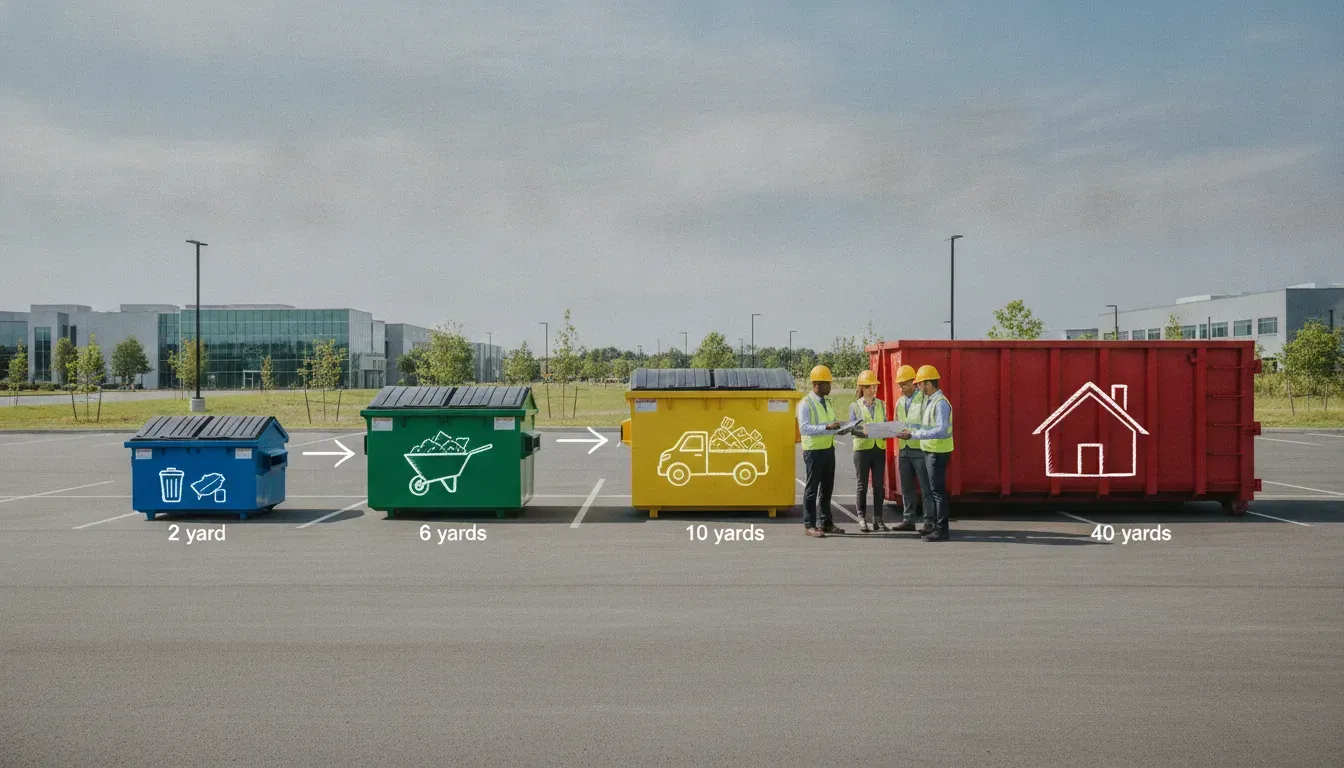
Roll-off dumpsters commonly range from 10 to 40 cubic yards, though the sizes available depend on the provider. A 10-yard container may suit a small cleanout or a limited renovation, while a 40-yard container can accommodate debris from larger construction projects. Your best fit depends on the project’s scope and the materials you’re removing.
Consider both volume and weight. Bulky items can take up space quickly, while dense materials such as concrete may reach a weight limit before the dumpster is full. Share a description of your debris with the rental company and ask which size it recommends. This overview of common dumpster sizes can help you compare options before requesting a quote.
Check Dimensions and Access, Not Just Capacity
A dumpster’s capacity tells you how much it can hold, but not whether it will fit at your site. Check the container’s dimensions and measure the placement area before booking. Also leave enough room for the delivery truck to approach, lower the dumpster, and return for pickup.
Look for obstacles along the truck’s route and above the placement spot, including gates, parked vehicles, tree branches, and overhead wires. If the container will sit on a driveway or paved surface, ask whether the provider offers boards to protect it. Share your measurements and placement details when requesting a quote. These site access tips can help you prepare for delivery.
How Do You Choose the Right Dumpster Size?
Choose a dumpster that can hold your project’s debris while staying within the provider’s weight limit and fitting safely on your site. Start by estimating how much waste you’ll produce, then consider what it’s made of, where the container will go, and how long you’ll need it. Share those details with the rental provider before booking so they can recommend a size and explain the costs.
Estimate Debris Volume and Project Scope
Make a list of the materials you expect to discard and estimate how much space they’ll take up. A small office cleanout may produce boxes, desks, and chairs, while a renovation can add bulky cabinets, flooring, and drywall. The project’s scope matters too: clearing one room is different from clearing an entire building.
If possible, estimate the number of bags, boxes, or truckloads of debris. Share your list with the provider, who can help match it to a container and identify materials that may need separate disposal. Underestimating the volume can leave you with an overfilled dumpster or an extra haul. Southwest Sanitation explains why accurate waste estimates matter when choosing a rental size.
Account for Dense Materials and Weight Limits
A dumpster can have space left over and still reach its weight limit. Concrete, dirt, brick, roofing shingles, and tile are dense, so even a small volume can add substantial weight. Tell the provider what you plan to dispose of, rather than estimating based on volume alone.
Ask how much weight your rental includes and what happens if your load exceeds that limit. Additional charges or other requirements may apply, depending on the rental terms. Location, debris type, rental length, and delivery distance can also affect the price. LoadUp outlines factors that influence rental costs, including container size and weight limits. Get an estimate based on your materials and project details before you book.
Plan for Loading Space, Pickup Access, and Timing
Think about where the dumpster will sit and how you’ll load it. Placing it near the work area may save time, but the container should not block workers, equipment, or safe paths around the site. Check that the delivery truck can reach the spot and that there’s enough clearance for both delivery and pickup.
Move vehicles and other obstacles, and check for low branches or overhead utilities. Plan your rental period around the project schedule, too. If work runs long, find out whether you can extend the rental and what extra days cost. Share access instructions and placement preferences in advance. Ted’s Trash recommends checking for site and overhead obstructions that could interfere with delivery or pickup.
Choose a Larger Size if Unsure, but Confirm the Price
If your estimate falls between two sizes, ask the provider to quote both. A larger container may leave room for unexpected debris and reduce the chance of needing an additional pickup. However, it may cost more, so compare the total price, including delivery, disposal, rental length, and the included weight allowance.
Describe the project and list the materials you’ll discard when asking for a recommendation. The provider can explain how the sizes differ and whether the larger option changes any rental terms. Don’t assume a bigger container includes a higher weight allowance. AAACarting recommends renting a dumpster when a project produces more waste than regular garbage service can handle. Use your debris estimate and the written quote to choose the right fit.
How Much Does a Dumpster Rental Cost?
Dumpster rental costs depend on the container size, debris, rental period, and delivery location. Use estimates as a starting point, then compare written quotes that cover the same services and rental length. A low advertised price may not include every charge.
See How Size, Location, Rental Length, and Debris Affect Cost
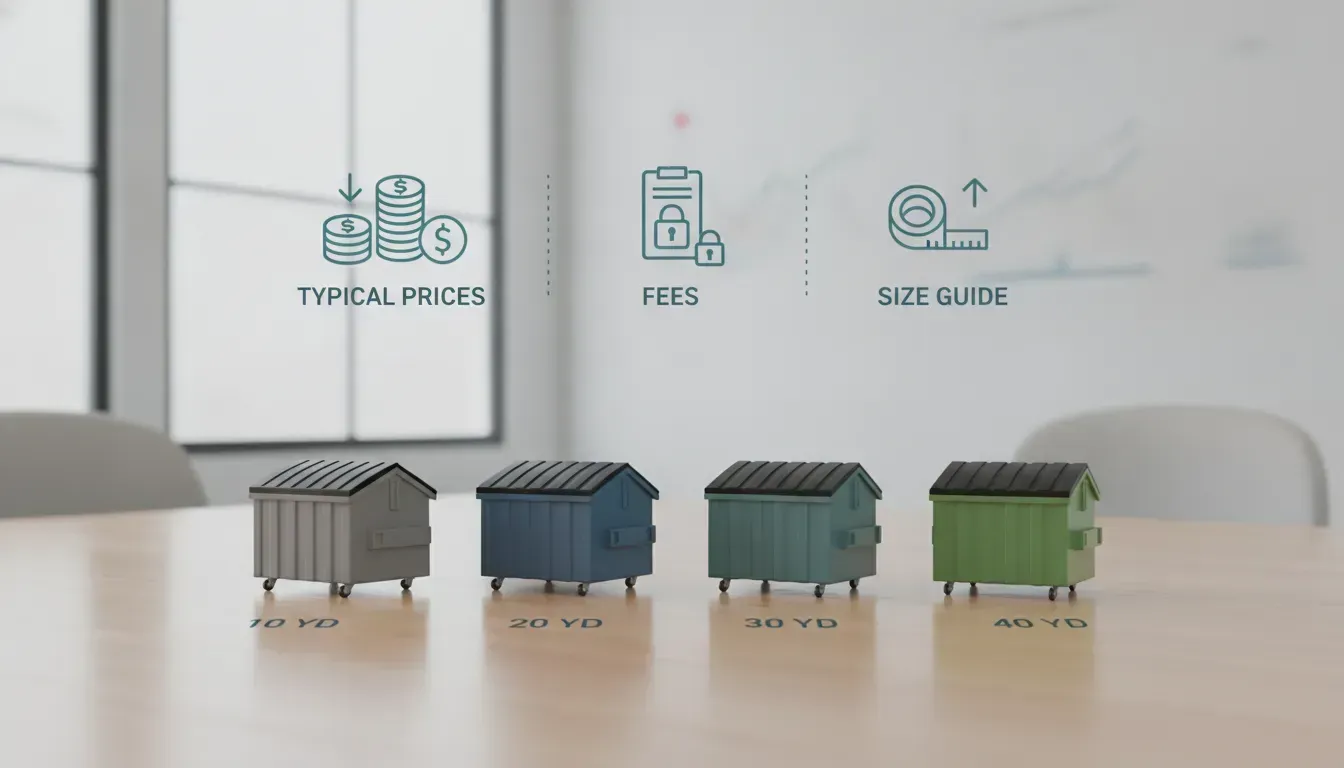
A typical one-week dumpster rental costs about $294 to $800, with a national average of around $385. As a general guide, a 10-yard dumpster may cost $220 to $580 per week, while a 20-yard option may range from $280 to $700. For larger containers, estimate $311 to $718 for a 30-yard dumpster and $350 to $800 for a 40-yard dumpster. LoadUp’s cost guide provides additional size-by-size estimates.
Your actual quote may differ based on local landfill fees, hauling distance, debris type, and how long you need the container. Prices in high-cost areas, including parts of New York, California, and New England, may be 20% to 40% above the national average. Share your location, project dates, and the materials you expect to discard when requesting a quote.
Check What Delivery, Pickup, Disposal, and Weight Limits Include
Ask the rental company to list what the quoted price covers. Delivery, pickup, disposal, and fuel may be charged separately, adding around $50 to $200 to the total. Confirm that the quote includes delivery and removal, and ask whether disposal fees cover your specific debris.
Check the included weight allowance, too. Many rentals cover one to three tons, but the limit can vary by provider and container size. Exceeding it may cost about $40 to $200 per additional ton. Ask how the company calculates weight and whether it can help estimate your load. LoadUp’s pricing details offer a useful reference for charges to discuss before booking.
Ask About Extra Days, Excess Weight, Overfilled Loads, and Restricted Materials
Projects can take longer than expected, so ask about the daily extension rate before scheduling delivery. Extra days may cost $10 to $25 each. Find out how to request an extension and whether you need to do so by a specific time to avoid a pickup or billing issue.Confirm the fill line, weight allowance, and accepted materials before loading. An overfilled container may not be safe to haul and could delay pickup. If you need a full dumpster replaced with an empty one, a swap-out may cost around $75 to $150. Ask whether that price includes disposal and delivery of the replacement. Provide a list of planned debris and get any restrictions or special-handling fees in writing.
Budget for Permits, Site Requirements, and Possible Price Changes
If the dumpster will sit on a public street or sidewalk, your city or town may require a permit. Check with the local permitting office before delivery to learn the rules, fees, and application timeline. For placement on private property, get permission from the owner or property manager and confirm the surface can support the container and delivery truck.
Ask the rental provider what could change the quoted price, including extra rental days, longer hauling distances, landfill fees, fuel charges, or site access issues. Request a written breakdown of potential costs for overweight loads, restricted materials, and schedule changes. Describe the delivery location and any access limits when you ask for a quote. That gives the provider a clearer picture of the job and helps you compare offers on the same terms.
What Rental Terms and Materials Should You Confirm?
Before booking, check that the rental terms suit your project, not just the dumpster size. Confirm the rental period, pickup process, weight allowance, and list of accepted materials. Getting these details in writing helps you plan the work and avoid surprise fees or disposal delays.
Review Rental Periods, Extensions, and Delivery and Pickup Schedules
Ask how long the base rental lasts and when the rental period begins. Terms can vary by provider: one company may advertise a seven-day rental, while another offers a two-week standard period. Extra days may be available for an additional charge, so confirm the extension rate and how much notice the company needs.
Check the delivery window, placement instructions, and pickup process, too. Some providers ask you to call when the dumpster is ready, while others arrange pickup in advance. USA Waste & Recycling describes its delivery confirmation and pickup process. If your project has a firm deadline, ask how to request an earlier pickup or a container exchange.
Confirm Weight Limits, Fill Lines, and Safe Loading Rules
Ask how much weight your rental includes and what you’ll pay if the load exceeds that allowance. A dumpster can look spacious but reach its weight limit quickly when filled with dense materials such as concrete, soil, or roofing. If you’re unsure how heavy your debris will be, describe the materials to the provider and ask for guidance.
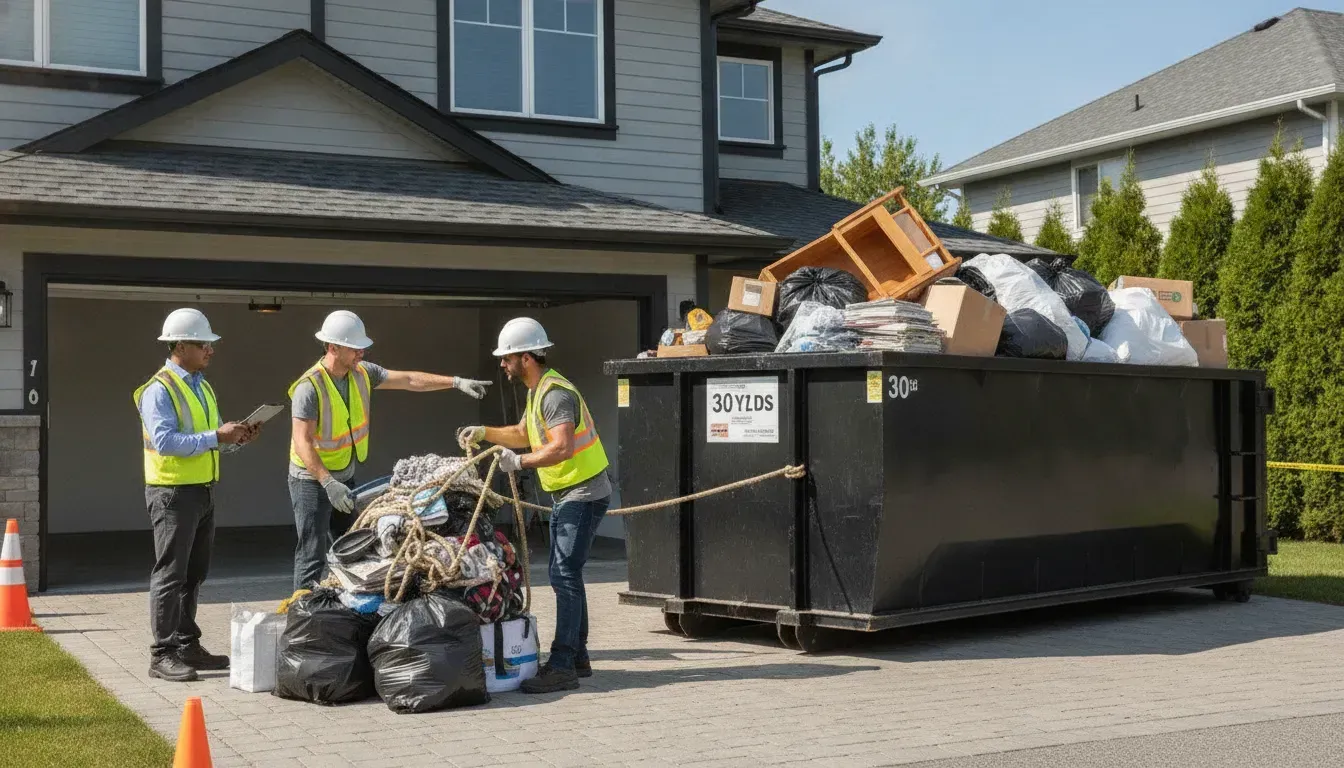
Keep debris below the fill line, with nothing sticking above the rim. Overfilled containers can be unsafe to transport, since loose materials may shift on the road or at the job site. They can also prevent the driver from hauling the dumpster. Dump ’N Go explains the risks of overfilling. Ask about arranging an exchange if you expect to fill the container before the project ends.
Check Accepted Materials and Items That Need Special Handling
Get the provider’s accepted-materials list before loading the dumpster. Many companies accept common household and project debris, such as furniture, wood, drywall, flooring, carpet, yard waste, and construction debris. Rules vary by company and location, so check each item rather than assuming it is allowed.
Some materials require special handling or a separate disposal service. Paint, chemicals, poisons, and combustible items are commonly restricted, but policies differ. AAACarting notes that hazardous and flammable materials may need a different disposal method. If you have an unusual item or aren’t sure how it is classified, describe it to the rental provider and ask for clear instructions before putting it in the container.
Ask How to Dispose of Prohibited Items
If the provider won’t accept an item, ask where to take it instead. Depending on the material, options may include a household hazardous waste program, recycling center, or specialized disposal service. Batteries, electronics, and appliances may also have separate collection rules, so check with your local municipality.
Don’t place prohibited items in the dumpster without permission. They may lead to extra charges, a rejected load, or delays while the material is removed. Disposal requirements can depend on local rules as well as the rental company’s policies. Southwest Sanitation recommends checking with the provider and local authorities to help prevent avoidable problems. Keep any disposal instructions handy while you work.
Clarify Billing, Schedule Changes, and Service ContactsRequest an itemized quote that lists the rental period, included weight, delivery and pickup, and disposal fees. Ask which charges may apply for extra rental days, excess weight, overfilled loads, or restricted materials. Confirm whether taxes and other service fees are included so you can compare quotes on the same basis.
Before booking, find out how to change the delivery or pickup schedule and who to contact if plans shift. Ask whether you’ll have a direct phone number or email for service questions, and keep the written terms accessible. Responsive support can help resolve issues such as delays or questions about accepted materials. Ted’s Trash discusses the value of clear communication when unexpected concerns come up.
How Should You Prepare for Dumpster Delivery?
Preparing the site before delivery helps the driver place the dumpster safely and gives your team a clear area to work. Start by choosing a level, stable spot, then check the truck’s route from the street to that location. The delivery vehicle needs room to maneuver, and the container may need more clearance than you expect. A roll-off dumpster delivery checklist suggests checking for at least 3 feet of space on each side, 22 feet of overhead clearance, and 34 feet of straight-line space. Ask your provider what its equipment requires before relying on any general measurement.
Next, clear the route and placement area of vehicles, tools, materials, and other obstacles. Confirm whether you need permission from a property owner or a permit from your local government, particularly if the dumpster will sit on a street or sidewalk. Rules can vary by location, including how long a dumpster can remain in place and which materials it can hold. Checking local dumpster placement requirements can help you identify what to ask your municipality or rental provider.
Plan for pickup, too. Keep the area accessible throughout the rental period, protect surfaces if needed, and share clear instructions with the provider before delivery day. Weather, parked cars, or changes to the worksite can affect access, so let the provider know if conditions change.
Choose a Stable Spot with Truck and Overhead Clearance
Choose a level, firm surface that can support the dumpster and its contents. Soft ground, slopes, or uneven pavement can make placement more difficult and may affect the container’s stability. If you’re unsure whether your preferred spot is suitable, describe the surface to your provider and ask before delivery.
Check the entire truck route, not just the final location. Low branches, utility lines, roof overhangs, gates, and parked vehicles can interfere with delivery or pickup. The truck also needs room to turn and position the container. Ask your provider about clearance requirements for its specific equipment, and mention any narrow entrances or tight corners so the driver can plan ahead.
Clear Obstacles and Mark the Placement Spot
Move vehicles, equipment, building materials, and other items out of the truck’s route and the planned placement area. Avoid blocking sidewalks, driveways, fire hydrants, or other shared access points. If the dumpster will go in a shared lot or driveway, let others know when the space needs to be clear.
Mark your preferred location with cones or another visible marker, and consider sending a photo to your provider. A marker helps show the driver where you want the container, but it doesn’t replace clear instructions or enough room for the truck. Leave space around the placement spot as well. The recommended clearance measurements are a useful reference, but confirm the exact space needed with your rental provider.
Confirm Permits, Property Permissions, and Surface Protection
Ask your city or town whether you need a permit to place a dumpster on a street, sidewalk, or other public property. Local rules may cover the placement location, rental period, and materials allowed in the container. Requirements vary, so check with the appropriate local office and ask your provider if they can explain the process. Reviewing common dumpster rental requirements can help you prepare questions.
For a dumpster on private property, get approval from the owner or property manager. If you plan to place it on a driveway or another finished surface, ask whether plywood or another protective layer is recommended. Share details about the surface, especially if it is newly paved, decorative, or prone to scratches. Confirming these details before delivery can help prevent damage and avoid last-minute changes to the placement plan.
Share Access Instructions and Placement Needs Before DeliveryTell the provider where you want the dumpster placed and describe anything that could affect access. This might include a narrow driveway, locked gate, low branches, steep approach, busy loading area, or limited turning space. Photos, a site map, or a short written description can make the layout easier to understand.
Confirm the delivery date and arrival window, and ask whether someone needs to be on site. Provide a contact number for delivery day, along with any instructions for entering a gated property or reaching the work area. If your preferred spot changes, contact the provider as soon as you can. Discussing placement in advance helps the provider plan for a safe delivery, as advised in this roll-off dumpster guide.
Plan for Weather and Keep the Site Accessible
Rain, snow, or ice can change ground conditions and make a site harder to reach. Before delivery, check that the route and placement area are clear and stable. Remove snow or ice where possible, and let your provider know if weather has affected access since you booked. If the area becomes unsafe, ask about rescheduling before the truck is dispatched.
Keep the route and space around the dumpster accessible throughout the rental period so your team can load it and the provider can retrieve it. Follow the fill line, and don’t load debris above the container’s sides. Overfilled loads can create safety concerns and interfere with transport. Secure loose materials around the site when wind is expected, and use proper loading practices to help prevent overfilling, as explained in this guide to roll-off dumpster use.
How Do You Choose a Dumpster Rental Provider?
A good provider should make it easy to understand what you’re renting, what it will cost, and what to expect on delivery day. Start with the practical details: does the company serve your address, offer a container that suits your debris, and have availability that fits your project schedule? Then compare rental periods, waste rules, and the way each company handles delivery and pickup.
Look beyond the advertised price, too. A clear quote and responsive service team can help you plan for weight limits, restricted materials, schedule changes, and other details that affect the job. It’s worth checking customer feedback and asking direct questions before you book. A few minutes of research can help you choose a provider whose service, terms, and disposal practices work for your project.
Compare Service Areas, Containers, Availability, and Waste Rules
First, confirm that the provider serves your project address and has a container suited to your debris and site. Compare available sizes, rental periods, and delivery dates. If your project has a fixed start date, ask whether the company can confirm a delivery window before you reserve.
Ask which materials the provider accepts, too. Rules vary by company and location, and some items may require separate disposal. Describe the waste you expect to load so the provider can flag restrictions before delivery. This helps prevent surprises such as a rejected load or extra charges. Review the factors that can affect a dumpster rental as you compare your options.
Request an Itemized Quote and Written Terms
Ask for a written quote that lists the container size, rental period, delivery and pickup charges, disposal fees, and included weight allowance. Confirm whether taxes or other charges apply, and find out what happens if you need extra days or exceed the weight limit.
Read the rental terms before booking, especially the rules for restricted materials, overfilled loads, and changes to your schedule. A low starting price may not include every service you need. Keep the quote and terms somewhere easy to find so you can check them if your plans change. Review common booking details, including delivery timing and site access, before confirming your rental.
Check Reviews and Confirm Delivery, Pickup, and Communication Practices
Read recent reviews and look for consistent details about on-time service, clear instructions, and communication. One review may reflect an unusual situation, but repeated comments can give you a better sense of what customers experience.
Then confirm the logistics with the provider. Ask when the dumpster will arrive, how to arrange pickup, how much notice schedule changes require, and who to contact with questions. Find out whether you need to be present for delivery, and make sure the placement area will be clear. Clear expectations can help you avoid delays and address concerns quickly. The booking guidance from Ted’s Trash also recommends confirming delivery arrangements in advance.
Ask How the Provider Handles Delays and Service Issues
Ask what happens if delivery or pickup is delayed, or if your project takes longer than expected. Find out how the company will notify you, whether you can extend the rental, and if additional days come with a fee. These details matter when your schedule depends on having the container on site.Confirm how to reach the team if a problem comes up. Ask whether you can call or message a local contact, and how quickly the company typically responds to schedule or billing questions. Save the contact information with your rental terms. A provider that explains its process upfront gives you a clear next step if something changes. Look for companies that emphasize transparent, dependable service.
Check Recycling and Disposal Practices for Your Project
Ask where your debris goes after pickup and whether the provider separates recyclable materials. Practices can depend on the material and local facilities, so describe your project and ask what can be recycled, reused, or sent for disposal.
If you have items that need special handling, confirm the approved process before placing them in the dumpster. This can help you avoid rejected materials, added fees, or a delayed pickup. Ask the provider to explain its disposal practices clearly, especially if your project produces construction debris, metal, or yard waste. For background on the topic, read about dumpster rentals and environmental considerations.
Frequently Asked Questions
What’s the difference between a roll-off dumpster and a front-load dumpster? A roll-off is delivered for a temporary project and picked up when you’re done. A front-load dumpster stays at your business for scheduled, ongoing waste collection.
How can I estimate the dumpster size I need? List the materials you’ll discard and estimate how much space they’ll take up. Also consider weight: dense debris such as concrete or soil can reach a limit before filling the container. Share these details with the provider and ask for a size recommendation.
Can I put electronics, paint, or appliances in a rental dumpster? Rules vary by provider and location. Ask about each item before loading, and check with your local municipality or a specialized disposal service if the provider cannot accept it.
Do I need a permit to place a dumpster at my business? A permit may be required if the dumpster will sit on a street, sidewalk, or other public property. Check local requirements before delivery. For private property, get approval from the owner or property manager.
What should a dumpster rental quote include? Ask for an itemized quote covering the container, rental period, delivery, pickup, disposal, and included weight allowance. Confirm possible charges for extra days, excess weight, restricted materials, or an overfilled load.